Why does coastal weather cause special problems for garage doors in Monmouth and Ocean County?
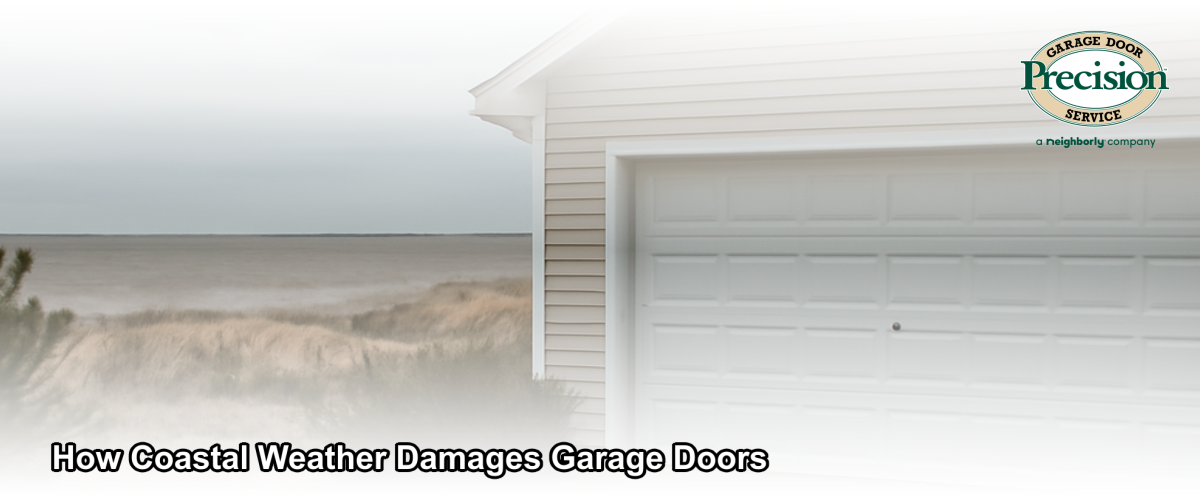
Garage doors in Monmouth and Ocean County face a uniquely punishing combination of salt-laden air, high humidity, driving rain, and seasonal nor’easters that accelerate wear far faster than inland locations experience. Salt air is the primary culprit: microscopic salt particles carried on the sea breeze settle onto metal springs, cables, tracks, and hardware, slowly breaking down protective coatings and triggering rust and corrosion. If you live anywhere from Point Pleasant Beach and Brick to Eatontown or Middletown, your garage door is working in conditions that demand more frequent attention than the national average.
Precision Door Service of Central & South Jersey has been helping homeowners in this exact environment for more than 25 years, serving more than 140,000 customers across Ocean and Monmouth Counties. That depth of local experience means our certified technicians know exactly which components fail first on coastal homes — and how to stop the damage before it becomes a full replacement.
What type of garage door material is best for a home near the ocean or bay?
Steel doors with a factory-applied galvanized or zinc coating are the most widely recommended option for coastal New Jersey homes, provided the finish is high-quality and properly maintained — but material choice alone is not enough to stop salt-air damage. Here is how the main options compare for homes near the water:
- Steel with baked-on polyester finish: Durable and widely available, but requires regular rinsing and lubrication to prevent rust at exposed edges and hardware mounting points.
- Fiberglass (composite): Naturally rust-resistant and a strong performer in high-humidity environments; a practical choice for homes very close to the water or bay.
- Aluminum: Lightweight and corrosion-resistant, though it dents more easily than steel — a reasonable trade-off for many Shore-area homeowners.
- Wood: Beautiful but the highest-maintenance option in coastal conditions; repeated humidity swells and contracts wood, stressing hardware and finishes significantly faster than in dry inland climates.
Precision Door Service installs new garage doors from leading manufacturers including Amarr, C.H.I., Clopay, and Fimbel, all of which offer material grades and finish options specifically suited to demanding coastal climates. Free estimates are available so you can review options and pricing before committing. As discussed in our full guide to new garage door installation, selecting the right insulation value also matters — a well-insulated door resists the temperature swings that cause metal components to expand, contract, and loosen hardware faster.
How does salt air corrode garage door springs and cables — and how quickly?
Garage door springs and cables are the components most immediately vulnerable to salt-air corrosion because they are under constant tension and any surface rust quickly becomes a structural weakness rather than just a cosmetic issue. In a typical inland New Jersey climate, torsion springs often last 7 to 12 years with normal use; in a high-salt coastal environment like Point Pleasant Beach, Manahawkin, or bayfront neighborhoods in Brick, that lifespan can shrink noticeably without proactive lubrication and inspection.
Cables suffer similarly: the individual steel strands that make up a garage door cable can corrode from the inside out, meaning a cable can look intact on the surface while its core is compromised. This is exactly why Precision Door Service technicians perform a comprehensive safety inspection on every service call — not just a quick look at the part that prompted the call. Catching a corroding cable or spring early is far less expensive than an emergency repair after a failure.
Our experienced technicians use high-quality replacement parts on every repair, so when corrosion does require a spring or cable replacement, the new components are built to last — not the lowest-cost parts that will have you calling again in two years.
What do nor’easters and coastal storms do to garage doors in Ocean and Monmouth County?
Nor’easters put garage doors under wind loads they were never designed to handle unless the door was specifically rated for high-wind performance, and in Ocean and Monmouth County these storms arrive multiple times each winter. The force of sustained winds and gusts can bow door panels inward, bend tracks, loosen roller brackets, and — in the worst cases — blow a door off its tracks entirely. After a significant storm, it is worth a close inspection even if the door appears to be operating normally.
Flooding associated with coastal storms introduces a second hazard: water intrusion at the base of the door saturates bottom weatherstripping, causes the lower panel to swell or warp, and can short-circuit the safety-eye sensors that sit just a few inches off the ground. Homes in lower-lying areas of Toms River, Manchester, and Brick that have experienced storm surge flooding should treat garage door sensor and hardware inspection as a post-storm routine, not a reaction to a breakdown.
If storm damage has left your door inoperable, Precision Door Service is here when you need us — anytime, every time, with 24/7 availability for emergency repairs throughout Monmouth and Ocean County.
How often should I have my garage door tuned up or lubricated if I live near the coast?
Homeowners near the New Jersey Shore should plan on garage door maintenance at least twice a year — more frequently than the once-a-year schedule that works for inland homes — because salt air and high humidity accelerate wear on every moving component year-round. A spring or summer maintenance visit catches corrosion that built up over the winter storm season, and a fall visit prepares the door for the next nor’easter cycle.
Between professional visits, homeowners can extend component life by rinsing visible metal hardware (springs, cables, hinges, and tracks) with fresh water during or after periods of heavy salt exposure — the same way you would rinse a car or deck furniture. Apply a garage-door-specific lubricant (not WD-40, which evaporates quickly) to rollers, hinges, and springs every 3 to 6 months.
Precision Door Service offers preventative maintenance and comprehensive safety inspections that identify worn or damaged components before they fail — a cost-effective way to protect what is often the largest moving part on a coastal New Jersey home. See our maintenance and safety inspection service page for details on what a full tune-up covers.
What are the hidden costs of ignoring coastal wear on a garage door?
Deferred maintenance on a coastal garage door tends to multiply costs: a corroded spring that costs a fraction of a full service call when caught early can, if it snaps under load, damage cables, drums, and in some cases door panels — turning one repair into three. Here is a realistic look at what escalating neglect can mean:
- Corroded rollers: Worn nylon or steel rollers create excess friction that strains the opener motor, shortening its lifespan and raising the eventual cost of opener replacement.
- Rusted tracks: Salt buildup in tracks causes rollers to bind, which puts uneven stress on panels and can cause cracking or denting at the roller contact points.
- Failed weatherstripping: Bottom and side seals that crack from UV and salt exposure allow wind-driven rain into the garage, which can damage flooring, stored belongings, and the door’s lower panels.
- Opener circuit damage: Salt-air humidity is corrosive to the circuit boards inside garage door openers; an opener that sits unused during the off-season in a beach house is particularly vulnerable.
Financing is available through GreenSky with an easy online application if a larger repair or full door replacement makes sense — so cost does not have to be a reason to delay restoring your door to safe operation.
Should I repair or replace my garage door if coastal corrosion has already set in?
Whether to repair or replace a salt-damaged garage door depends on the extent of structural damage to the panels themselves, not just the hardware. If springs, cables, rollers, and tracks are corroded but the door panels are structurally sound and the door is less than 10 to 15 years old, targeted repairs using high-quality replacement parts almost always make more financial sense than a full replacement. If panels are warped, cracked, or rusting through — especially on a steel door that has lost its finish coating — replacement is often the smarter long-term investment.
Precision Door Service technicians will never push a replacement when a repair is the right answer for the customer. Our customer-first approach means the technician explains what they found, what they recommend, and why — and you make the informed decision. Free estimates are available for new door installations so you have real numbers to compare before deciding. As our technicians serving the Brick and Toms River areas frequently advise: the right call depends on the whole picture, not just the part that is visibly failing today.
This guide was prepared by the experienced team at Precision Door Service of Central & South Jersey, locally serving Central & South Jersey since 2000 from our offices in Brick and Milltown, NJ — trusted garage door experts for Monmouth and Ocean County homeowners.
Frequently Asked Questions
What type of garage door material holds up best near the New Jersey Shore?
Fiberglass and aluminum doors are the most corrosion-resistant choices for homes near the ocean or bay in Monmouth and Ocean County. High-quality steel doors with factory galvanized finishes also perform well when properly maintained with regular rinsing and lubrication. Wood is the highest-maintenance option in coastal salt-air conditions and generally requires the most upkeep.
How often should a coastal NJ homeowner have their garage door serviced?
Homeowners near the Shore should schedule professional garage door maintenance at least twice a year — once in spring after winter storm season and once in fall before it begins. Salt air and humidity accelerate wear on springs, cables, and rollers faster than the once-a-year schedule that works for inland homes.
Can a nor’easter damage a garage door even if it still opens and closes afterward?
Yes. High winds from a nor’easter can bend tracks, loosen roller brackets, bow panels, and stress the door’s structural integrity in ways that are not immediately obvious from normal operation. A post-storm inspection is recommended, especially if the door experienced sustained wind loads or any flooding around the base.
How long do garage door springs last on a home near the ocean in New Jersey?
In a high-salt coastal environment, garage door springs can have a shorter effective lifespan than the 7 to 12 years typical in inland areas if they are not regularly lubricated and inspected. Proactive maintenance — catching early corrosion before it becomes a structural failure — is the most cost-effective way to get the most out of your springs near the water.
Does Precision Door Service offer free estimates for new garage doors in Ocean and Monmouth County?
Yes. Precision Door Service of Central and South Jersey provides free estimates for new garage door installation throughout Ocean and Monmouth County, including towns like Brick, Toms River, Point Pleasant Beach, Manahawkin, Eatontown, and Middletown. Financing is also available through GreenSky with an online application.