How much does garage door color actually affect your home’s curb appeal?
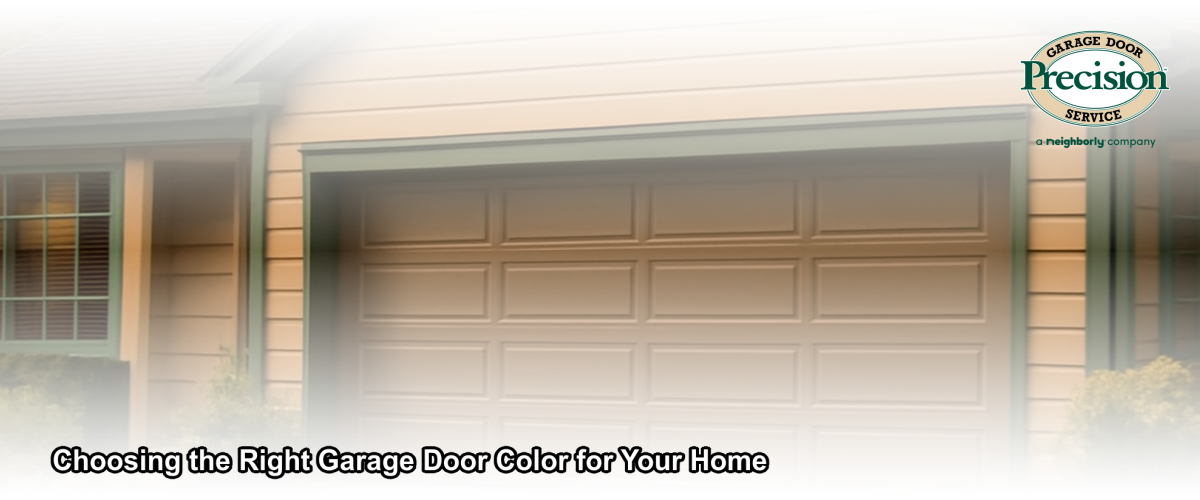
Garage door color is one of the single biggest visual decisions you can make for your home’s exterior — the garage door often covers 30% or more of a home’s front-facing surface area, making it impossible to overlook. In neighborhoods across Ocean, Monmouth, Mercer, and Middlesex Counties, the right color can make a home look polished and intentional; the wrong one can date it instantly or clash with the surrounding streetscape.
At Precision Door Service of Central & South Jersey, our door specialists work with homeowners every day on decisions like this one — and the color conversation comes up on almost every new door estimate. This guide covers what we’ve learned from more than 25 years of helping Central and South Jersey homeowners get this decision right.
What garage door colors are most popular with Central Jersey homeowners right now?
The most popular garage door colors among Central Jersey homeowners currently include warm whites, soft greiges, charcoal gray, and classic black — all of which photograph well, age gracefully, and coordinate easily with the region’s mix of coastal cottages, colonial-style homes, and newer construction.
- Bright white and soft white: The most versatile choice, works on virtually any architectural style, and is the top seller across our service area from Princeton to Toms River.
- Sandstone and greige: Warm neutrals that complement the tan, beige, and cream siding common in neighborhoods throughout Brick, Freehold, and Monroe.
- Charcoal and dark gray: High-contrast, contemporary, and increasingly popular in Middletown, Edison, and newer Middlesex County builds.
- Black: A bold, timeless choice that adds sophistication — especially paired with carriage-house hardware and white or gray siding.
- Navy and dark green: Growing in popularity on coastal homes near Point Pleasant Beach and Manahawkin, where deeper tones complement waterfront settings.
How should you match your garage door color to your home’s existing exterior?
The most reliable approach is to treat the garage door as a major trim element — it should either match your front door and shutters precisely, or stay within two shades of your siding’s undertone so it reads as intentional rather than accidental.
Start by identifying whether your home’s siding leans warm (beige, tan, cream, yellow-brown) or cool (gray, blue-gray, taupe with purple undertones). Warm siding pairs best with warm-toned doors: sandstone, warm white, or bronze. Cool siding pairs better with charcoal, slate, cool gray, or crisp white. Mixing warm and cool tones — such as a blue-gray house with a tan door — is the most common color mistake our door specialist Caitlin sees on consultations.
If your home has shutters or a front door in an accent color, repeating that color on the garage door is a bold but effective strategy that creates strong visual unity. This works especially well with black, navy, and hunter green.
Does the Jersey Shore climate affect which garage door colors hold up best?
Yes — homes within a few miles of the Atlantic coast, Barnegat Bay, or the Metedeconk River face salt air, humidity, and UV exposure that can cause certain dark colors to fade and certain lighter finishes to chalk or peel faster than they would inland.
For coastal homes in areas like Point Pleasant Beach, Brick, and Manahawkin, lighter and mid-range colors — particularly factory-applied painted steel and fiberglass doors — tend to hold their finish longer than dark colors, which absorb more heat and expand and contract more aggressively in the sun. The material matters as much as the color here: fiberglass and steel doors with baked-on finishes from manufacturers like Clopay, Amarr, and C.H.I. are engineered to resist coastal conditions far better than wood veneer doors finished on-site.
If you want a dark charcoal or black door near the shore, look for doors with premium UV-resistant finishes, and ask about insulated steel construction — the thermal stability reduces warping and finish stress over time. As covered in our guide to garage door materials for coastal New Jersey homes, insulation value and finish type matter as much as aesthetics in Ocean County.
Should your garage door color match the front door or just complement it?
Matching the garage door exactly to the front door is not required — and for many home styles, it’s actually not the best choice. The most design-forward approach is to make the garage door color echo one element of the facade (siding, trim, or front door) rather than duplicate it exactly.
A common and very effective formula: white or off-white trim and shutters with a charcoal or black garage door and a complementary-colored front door. This layered approach gives the home depth without visual chaos. Alternatively, matching the garage door to the body color of the house — rather than the trim — makes the garage visually recede, which works especially well when the garage is front-facing and dominant on the lot, as it often is in Brick, Jackson, and East Windsor neighborhoods built in the 1980s and 1990s.
What finish options are available for new garage doors — and does finish affect color choice?
Most new residential garage doors from leading manufacturers come in factory-applied painted steel finishes, woodgrain embossed finishes, or true wood and faux-wood options — and the finish type directly affects how a color reads and how long it lasts.
- Factory-painted steel: The most durable and color-stable option. Manufacturers like Clopay, Amarr, Fimbel, and C.H.I. offer dozens of standard colors plus woodgrain emboss options that hold color for years with minimal maintenance.
- Woodgrain embossed steel or fiberglass: Available in simulated wood tones — cedar, walnut, mahogany — that add warmth without wood’s maintenance demands. Popular on carriage-style doors throughout Monmouth County.
- Real wood: Fully customizable in stain or paint color, but requires regular refinishing — typically every 2 to 4 years in New Jersey’s humid, freeze-thaw climate — and is not recommended for oceanfront or bayfront exposures.
- Custom color: Some manufacturers offer custom paint programs for an upcharge. This makes sense for homeowners with a very specific body color that falls outside the standard palette.
Precision Door Service of Central & South Jersey carries doors from Amarr, C.H.I., Clopay, Fimbel, and other leading brands — and our team provides free estimates on new door installations so you can review actual door samples in your chosen styles and colors before committing.
Are there hidden costs to consider when choosing a color or finish for a new garage door?
The base price of a new garage door installation varies by material, insulation level, and size — but certain color and finish choices carry additional cost that homeowners don’t always anticipate upfront.
- Non-standard colors: Doors outside a manufacturer’s standard color palette may require a custom paint program, which can add $100 to $300 or more to the door price depending on the manufacturer.
- Woodgrain finishes: Embossed woodgrain doors in painted or stained tones typically cost $50 to $200 more than smooth-panel equivalents at the same insulation level.
- Real wood doors: Natural wood doors carry a significant price premium over steel and require budgeting for ongoing refinishing — factor in professional maintenance every few years.
- Hardware upgrades: Color selection often motivates a hardware upgrade (hinges, handles, decorative straps) to complete the look. These add minimal cost but can run $50 to $150 depending on finish and quantity.
- What’s included in a standard installation: Precision Door Service includes professional installation, removal and disposal of your old door, and a comprehensive safety inspection with every new door installation — no hidden labor fees.
Financing is available through GreenSky with an easy online application, so a quality door in the right color doesn’t have to be a budget strain. Ask about current financing options when you schedule your free estimate.
How do you evaluate a color choice before committing to a new garage door?
The most reliable way to preview a garage door color before purchasing is to use the manufacturer’s online visualizer tool with a photo of your actual home — most major brands including Clopay and Amarr offer these on their websites — and then review physical door samples in natural light at your home before finalizing.
Screen-based color tools are useful for narrowing your list to two or three finalists, but they can’t replicate how a color reads in New Jersey’s morning light versus late-afternoon sun, or how it interacts with your specific siding color and landscaping. Our door specialist Caitlin brings sample materials to consultations throughout our service area — from New Brunswick and Piscataway to Toms River and Point Pleasant — so you can make a confident decision with your eyes, not just a monitor.
This guide was prepared by the team at Precision Door Service of Central & South Jersey, locally serving homeowners across Ocean, Monmouth, Mercer, and Middlesex Counties since 2000.
Frequently Asked Questions
What is the most popular garage door color in Central and South Jersey?
White and soft white remain the most popular garage door colors across Central and South Jersey, followed closely by warm greige, charcoal gray, and black. These neutrals work across the region’s wide mix of home styles and tend to maintain strong resale appeal.
Does a garage door color need to match the front door?
No — garage door color does not need to match the front door exactly. The most effective approach is to coordinate the garage door with one element of the facade (trim color, siding tone, or front door accent) rather than duplicate it, which gives the home visual depth without looking mismatched.
Do dark garage door colors fade faster in the New Jersey sun?
Dark colors absorb more heat and UV radiation, which can accelerate fading and finish stress — especially on homes near the Shore in Ocean and Monmouth Counties. Factory-applied finishes on insulated steel doors from major manufacturers hold up significantly better than site-painted or wood doors in dark tones.
Does Precision Door Service offer free estimates on new garage doors?
Yes — Precision Door Service of Central and South Jersey provides free estimates on all new residential garage door installations. Their door specialists can review style, material, insulation, and color options with you and bring samples to help you decide.
How long does a factory-painted garage door finish last before it needs repainting?
Factory-applied painted steel garage doors from major manufacturers typically hold their finish for many years with only basic cleaning — far longer than site-painted wood doors, which generally need refinishing every 2 to 4 years in New Jersey’s climate. Coastal exposure near the Shore can shorten any door’s finish life, so UV-resistant factory finishes are especially recommended in Ocean County.