What do garage door hinges actually do, and why do they wear out?
Garage door hinges connect the individual panels of your door and allow them to bend and flex through the track as the door opens and closes. Every time your garage door cycles — up or down — those hinges pivot under load, and over time that repetitive stress causes metal fatigue, rust, and loosening that can shorten a hinge’s useful life considerably.
Most residential garage doors use between 10 and 15 hinges depending on the number of panels, and each one is working every single cycle. On a door that opens twice a day, that adds up to more than 700 cycles a year — and in a busy household, far more. Understanding this load helps explain why proactive maintenance pays off.
How long do garage door hinges typically last?
Garage door hinges on a well-maintained residential door generally last anywhere from 10 to 15 years, though coastal and high-humidity environments can cut that lifespan significantly shorter. At Precision Door Service of Central & South Jersey, our experienced technicians see hinge wear accelerated by salt air exposure — a real concern for homeowners in Point Pleasant Beach, Manahawkin, and other shore communities along the Ocean County coast.
Hinges that are never lubricated, that have been bent by an impact, or that were original equipment on a door installed more than a decade ago are the most common candidates for replacement during a maintenance visit. As we cover in our full guide to how long garage door components last, springs and rollers often go first — but neglected hinges are not far behind.
How often should you lubricate garage door hinges?
Garage door hinges should be lubricated at least once or twice a year, with more frequent attention recommended if your garage is exposed to salt air, temperature extremes, or high humidity — all conditions common across Ocean, Monmouth, Mercer, and Middlesex Counties in New Jersey. The freeze-thaw cycles that hit Central Jersey every winter are especially hard on metal hardware, causing expansion, contraction, and eventual cracking in unlubricated pivot points.
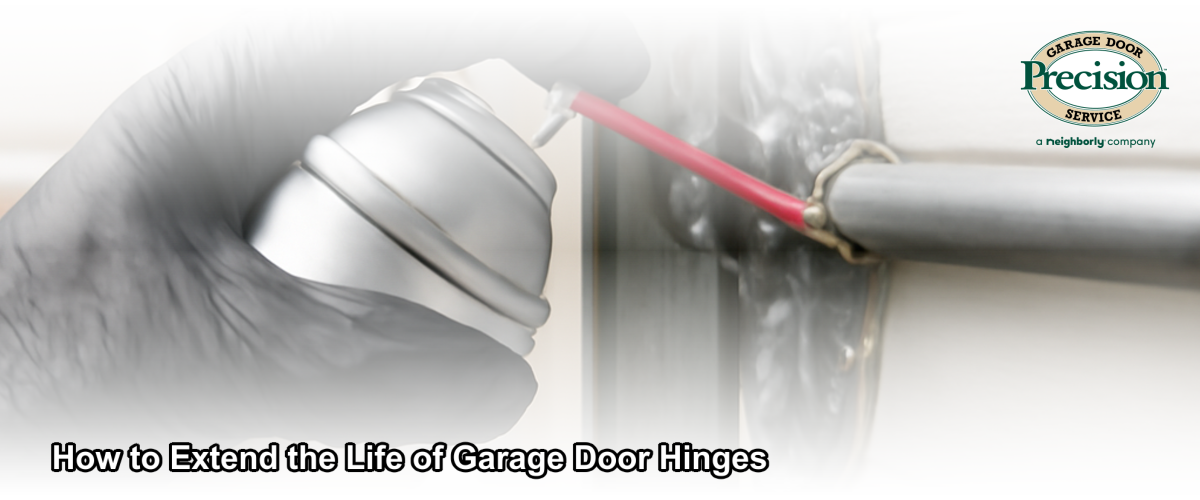
Use a dedicated garage door lubricant — a lithium-based spray or silicone-based product — applied directly to the hinge knuckles and pivot points. Do not use WD-40 as a long-term solution; it is a solvent and water displacer, not a lasting lubricant, and it can actually attract grit that accelerates wear. Apply lubricant with the door in the closed position, then cycle the door a few times to work it in.
What are the signs that a garage door hinge needs to be replaced, not just lubricated?
A hinge that is cracked, visibly bent, has a worn or elongated pivot hole, or makes a grinding noise that persists after lubrication should be replaced rather than simply oiled. These are signs that the metal has fatigued beyond what maintenance can reverse, and a failing hinge can cause the door panel to shift out of alignment, placing extra stress on cables, springs, and the opener.
Other warning signs our certified technicians at Precision Door Service of Central & South Jersey look for during a comprehensive safety inspection include:
- Rust or corrosion that has penetrated into the knuckle joint, not just surface discoloration
- Loose or stripped mounting screws that no longer hold the hinge flat against the panel
- Visible wobble or play between hinge sections when the door moves
- Squealing or popping sounds that return within a day or two of lubrication
If you notice any of these, scheduling a repair visit sooner rather than later protects the rest of your door system from cascading damage.
What is included in a garage door maintenance visit, and does it cover hinges?
A professional garage door maintenance and safety inspection from Precision Door Service covers every moving component on your door — including all hinges, rollers, cables, springs, tracks, and the opener system. During the visit, a technician checks hinge condition, tightens any loose hardware, lubricates pivot points, and flags any components showing wear that should be addressed before they fail. This is exactly the kind of proactive, honest service that reflects our customer-first approach: we tell you what we see and let you decide, without pressure.
Preventative maintenance is one of the most cost-effective things a homeowner can do to protect their garage door investment. Catching a worn hinge early typically means a straightforward part swap; ignoring it can mean a bent panel, a snapped cable, or a door that comes off its track — repairs that cost significantly more and can leave you without a functioning door. As we cover in our guide to garage door tune-ups, the cost of a maintenance visit is almost always a fraction of what an emergency repair runs.
Does the New Jersey climate make hinge maintenance more important?
Yes — the combination of coastal humidity, salt air, and hard winters across Central and South Jersey makes regular hinge maintenance more critical here than in drier inland climates. Homeowners in Brick, Toms River, Point Pleasant Beach, and other Ocean County communities deal with salt-laden air that accelerates corrosion on steel hardware year-round. Meanwhile, the freeze-thaw cycle from December through March causes metal to contract overnight and expand during the day, gradually loosening fasteners and stressing pivot points.
Choosing hinges made from heavier-gauge steel when it is time for replacement is worth the modest additional cost in this environment. Precision Door Service of Central & South Jersey uses high-quality parts specifically because we know what the local climate demands — and because doing the right thing for the customer means not cutting corners on components that will be working every single day.
Can I replace garage door hinges myself, or should I call a professional?
Lubricating hinges is a straightforward DIY task any homeowner can handle safely with the door in the closed position and the right product. Replacing hinges, however, requires more caution — hinges near the bottom corners of the door are in close proximity to the cable drums and the high-tension torsion spring system, and working near those components without training creates a genuine safety risk. The American Garage Door Association consistently identifies spring-related injuries as the most common garage door accidents, and many occur during well-intentioned DIY repairs.
For routine lubrication, do it yourself and do it often. For replacement, alignment adjustments, or any work near the bottom brackets and cables, calling a professional is the right call. Precision Door Service of Central & South Jersey has been helping homeowners across Ocean, Monmouth, Mercer, and Middlesex Counties make exactly this kind of decision — honestly, without overselling — for more than 25 years and more than 140,000 homeowners served.
What hidden costs or additional items should I expect when getting hinges serviced?
When a technician inspects your hinges, it is common to find related components that have worn at the same rate — particularly rollers, which share the same mounting bracket as hinges on most door designs, and the carriage bolts that hold everything to the panel. Here is what can realistically come up during a hinge service visit:
- Rollers: Nylon or steel rollers wear out on a similar timeline to hinges; replacing them at the same visit saves a return trip.
- Mounting hardware: Stripped or rusted carriage bolts should be replaced at the same time as the hinge to ensure a secure attachment to the panel.
- Track alignment: A bent hinge can pull a section of track slightly out of true; technicians check alignment as part of a comprehensive inspection.
- Panel condition: If a hinge has been failing for a while, the panel itself may show stress cracks or warping at the mounting points that merit attention.
Precision Door Service technicians walk through every finding with you before any work begins — no surprises, no pressure, just an honest explanation of what they see and what they recommend. That approach is what has earned us a 5-star reputation serving homeowners from Princeton to Point Pleasant Beach.
This guide reflects the expertise of the experienced technicians at Precision Door Service of Central & South Jersey, locally serving Central & South Jersey since 2000 from our offices in Brick and Milltown, NJ.
Frequently Asked Questions
How often should I lubricate my garage door hinges?
Lubricate garage door hinges at least once or twice a year using a lithium-based or silicone garage door lubricant — not WD-40. In coastal areas like Point Pleasant Beach or Manahawkin where salt air speeds up corrosion, every six months is the better interval.
How do I know if my garage door hinges need to be replaced?
Replace a hinge if it is cracked, visibly bent, has an elongated pivot hole, or squeals and grinds again within a day or two of being lubricated. Loose mounting screws that no longer hold flush and visible rust penetrating into the joint are also clear replacement signals.
Is it safe to replace garage door hinges myself?
Lubricating hinges yourself is safe and easy with the door fully closed. Replacing hinges — especially near the bottom brackets — puts you close to high-tension springs and cables, which makes professional service the safer choice for anything beyond basic lubrication.
How long do garage door hinges last?
Well-maintained garage door hinges typically last 10 to 15 years, but coastal humidity and the freeze-thaw winters common in Central and South Jersey can shorten that lifespan noticeably without regular lubrication and annual inspections.
Does Precision Door Service of Central and South Jersey offer garage door maintenance visits?
Yes — Precision Door Service of Central & South Jersey performs comprehensive maintenance and safety inspections covering all hinges, rollers, springs, cables, tracks, and opener components, serving homeowners across Ocean, Monmouth, Mercer, and Middlesex Counties from offices in Brick and Milltown, NJ.