Why does my garage door opener keep overheating?
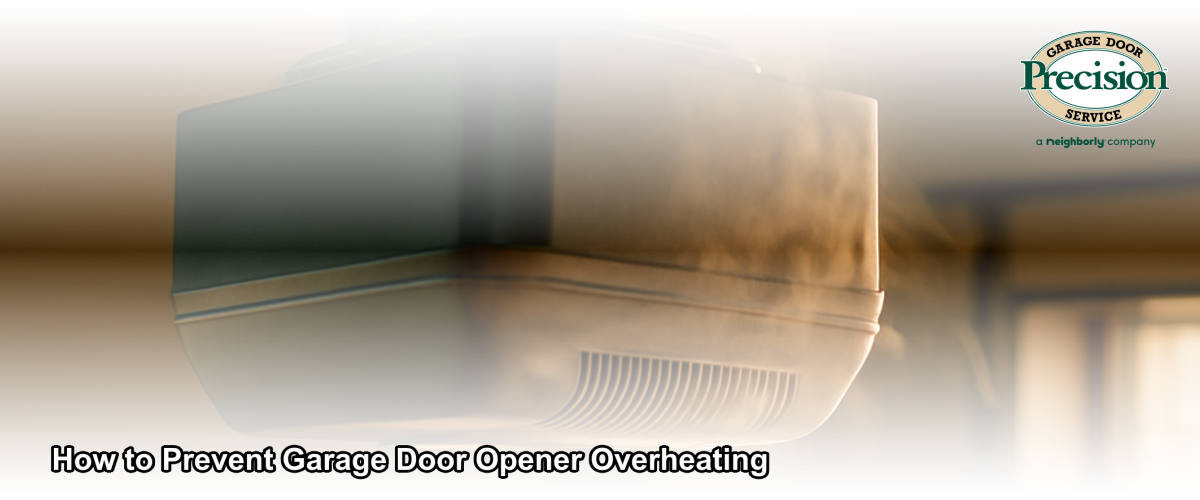
A garage door opener overheats when its motor is forced to work harder than it was designed to — most commonly because of a mechanical problem with the door itself, poor ventilation around the unit, or simply being run too many cycles in a short period of time. The opener’s motor generates heat every time it runs, and without enough time to cool down between cycles, that heat builds up and triggers the unit’s built-in thermal protection switch.
At Precision Door Service of Central & South Jersey, our experienced technicians see this issue regularly — especially during the humid summers along the Jersey Shore and in communities like Brick, Toms River, and Point Pleasant, where garages can trap significant heat from June through September.
What are the most common causes of garage door opener overheating?
The most common causes of garage door opener overheating are a door that is out of balance, worn rollers or binding hardware that creates excessive resistance, running too many consecutive cycles, and an overheated garage with poor airflow. Each of these forces the motor to draw more current and generate more heat than normal.
- Unbalanced door: If your door is not properly balanced, the opener motor carries weight it was never meant to support. This is the single most frequent reason openers burn out prematurely.
- Worn rollers, hinges, or tracks: Friction from deteriorating hardware makes every cycle harder on the motor. Nylon rollers typically last 10,000–15,000 cycles before they need replacing.
- Rapid consecutive cycles: Running the opener more than 4–5 times in a row without a cooldown period is enough to trip the thermal overload on most residential units.
- Hot, poorly ventilated garage: In Ocean and Monmouth County, garage temperatures can exceed 100°F on summer afternoons — ambient heat alone can push a working motor past its safe operating threshold.
- Undersized opener for door weight: A 1/2 HP opener on a heavy two-car door with insulation is working at its limit every single cycle.
How do I know if my garage door opener is overheating right now?
Your garage door opener is likely overheating if the door stops mid-cycle and will not respond to the remote or wall button for 15–30 minutes, the motor housing feels hot to the touch, or you notice a faint burning smell near the unit. Most openers have a built-in thermal protection switch that shuts the motor down automatically — this is a safety feature, not a malfunction, but it is a clear signal something needs attention.
If your opener consistently trips this switch, do not keep forcing it to run. Repeated thermal shutdowns accelerate wear on the motor windings and can shorten the lifespan of an opener that might otherwise last 10–15 years.
How can I prevent my garage door opener from overheating?
You can prevent garage door opener overheating by keeping the door properly balanced and lubricated, replacing worn hardware before it creates resistance, improving garage ventilation during hot months, and making sure the opener’s HP rating matches your door’s weight. Regular preventative maintenance is the most reliable long-term solution.
Here are the most effective prevention steps, in priority order:
- Balance check: Disconnect the opener and manually lift the door to waist height — it should stay in place. If it drops or shoots up, the spring tension needs professional adjustment. This is the highest-impact fix you can make.
- Lubricate moving parts twice a year: Apply a garage-door-specific lubricant (not WD-40) to the rollers, hinges, and tracks every spring and fall. In Central & South Jersey’s salt-air coastal environment, twice-annual lubrication is especially important to prevent corrosion-related friction.
- Replace worn rollers and hardware: Steel rollers are noisier and wear faster; nylon rollers run quieter and place less strain on the opener motor.
- Add ventilation: A simple ceiling fan, exhaust vent, or even leaving a window cracked can reduce garage air temperature by 10–15°F, meaningfully reducing heat load on the motor.
- Limit back-to-back cycles: During move-in days, deliveries, or heavy-use periods, give the opener at least 5 minutes between every few cycles to cool down.
- Check opener HP rating: Heavier insulated or two-car doors often need a 3/4 HP or 1+ HP unit. Our door specialists can confirm whether your current opener is sized correctly for your door.
Does the New Jersey climate make garage door opener overheating worse?
Yes — New Jersey’s hot, humid summers directly increase the risk of garage door opener overheating, particularly in coastal communities across Ocean and Monmouth Counties where garages face both high ambient temperatures and salt-air corrosion that accelerates hardware wear. Inland communities in Mercer and Middlesex Counties also see summer heat spikes that push unconditioned garages well above the comfort threshold for opener motors.
The combination of summer heat and the mechanical resistance caused by salt-air corrosion on hinges, rollers, and tracks is a double threat. This is one of the reasons Precision Door Service of Central & South Jersey recommends a professional maintenance visit at least once a year — ideally in the spring, before the summer heat arrives.
When should I call a professional instead of troubleshooting this myself?
Call a professional garage door technician if your opener overheats repeatedly even after reducing cycle frequency, if the door feels heavy or uneven when you disconnect the opener and lift it manually, or if you notice frayed cables, broken springs, or bent tracks during your inspection. Spring adjustment and cable work are not DIY tasks — these components are under extreme tension and can cause serious injury if handled without proper training and tools.
Precision Door Service of Central & South Jersey has been serving homeowners throughout Brick, Toms River, Freehold, Princeton, Middletown, and surrounding communities for more than 25 years and has helped more than 140,000 homeowners with exactly these kinds of issues. Our certified technicians perform a comprehensive safety inspection on every visit, explain every recommended repair clearly, and use high-quality parts — so you understand exactly what is wrong and why before any work begins.
What does it cost to repair or replace an overheating garage door opener in New Jersey?
The cost to address an overheating garage door opener in Central and South Jersey depends on whether the fix is a tune-up and hardware adjustment or a full opener replacement — but in many cases the root cause is a mechanical door issue, not the opener itself, and that repair is often less expensive than replacing the unit.
Common cost scenarios include:
- Lubrication and adjustment service: A preventative maintenance visit that includes lubrication, balance check, hardware inspection, and minor adjustments is typically the most affordable path and can resolve overheating caused by friction and imbalance.
- Roller or hardware replacement: Replacing a full set of worn rollers and hinges addresses resistance-related overheating directly and extends opener life significantly.
- Spring replacement: If an unbalanced door traces back to a worn or broken spring, spring replacement is a priority repair — our technicians carry high-quality replacement parts on the truck and can typically complete this the same day.
- New opener installation: If the motor itself is damaged from repeated thermal shutdowns, or if the unit is undersized for the door, a new LiftMaster or Genie opener — including belt-drive, chain-drive, or wall-mounted models with Wi-Fi and battery backup — may be the right long-term solution. Precision Door offers free estimates on new opener installations.
Financing is available through GreenSky with a simple online application — ask our team for details when you schedule your visit.
How long do garage door openers typically last, and does overheating shorten their lifespan?
A well-maintained residential garage door opener typically lasts 10–15 years, but repeated overheating can significantly shorten that lifespan by degrading the motor windings and circuit board over time. An opener that thermally shuts down regularly may fail years earlier than one that runs within its design limits.
As covered in our guide to how long garage door components last, the opener is only as reliable as the system it is connected to. Springs, rollers, and cables that are past their service life put unnecessary strain on the opener — so maintaining the whole door, not just the motor, is what keeps an opener running at its full rated lifespan. Our maintenance and safety inspection service is designed specifically to catch these issues before they cause a breakdown.
This guide was prepared by the experienced technician team at Precision Door Service of Central & South Jersey, locally serving Central & South Jersey since 2000 from our offices in Brick and Milltown, NJ.
Frequently Asked Questions
Why does my garage door opener stop working in hot weather?
Most openers have a built-in thermal protection switch that shuts the motor off when it gets too hot. In New Jersey summers, garage temperatures can exceed 100°F, which — combined with any extra friction from worn hardware or an unbalanced door — is enough to trip that switch. The opener typically resets after 15–30 minutes once it cools down.
Can an overheating garage door opener be fixed, or does it need to be replaced?
In many cases, the overheating is caused by a mechanical issue with the door itself — worn rollers, an unbalanced door, or binding hardware — rather than a failed motor. Fixing those underlying problems often resolves the overheating completely without replacing the opener. If the motor has been repeatedly damaged by thermal shutdowns, replacement may be the more cost-effective option.
How often should I have my garage door opener serviced to prevent overheating?
A professional maintenance visit once a year — ideally each spring before summer heat arrives — is the best way to prevent overheating. That visit should include a balance check, lubrication of all moving parts, hardware inspection, and opener force adjustment. In coastal areas of Ocean and Monmouth Counties, twice-annual lubrication is recommended due to salt-air corrosion.
Does Precision Door Service offer same-day garage door opener repair in Central and South Jersey?
Yes — Precision Door Service of Central & South Jersey stocks high-quality replacement parts on their service trucks, so in many cases technicians can complete the repair the same day they come out. They serve communities across Ocean, Monmouth, Mercer, and Middlesex Counties including Brick, Toms River, Freehold, Princeton, and Middletown.
What type of garage door opener is least likely to overheat?
Belt-drive openers with a motor HP rating matched to your door’s actual weight tend to run cooler and quieter than chain-drive units working near their capacity. Adding a battery backup model also protects you if the thermal switch trips during a power outage. Precision Door Service installs LiftMaster and Genie models and can recommend the right unit for your specific door.