Why do garage doors rust, especially in New Jersey?
Garage doors rust when moisture, oxygen, and exposed metal interact over time — and in Central and South Jersey, that process happens faster than almost anywhere else in the region. Homeowners in Ocean and Monmouth County coastal communities face salt air off the Atlantic and Barnegat Bay, which dramatically accelerates oxidation on steel and iron components. Even inland areas across Middlesex and Mercer Counties deal with humid summers, freeze-thaw cycles through winter, and road salt that gets tracked into garages and driveways.
Steel garage doors are the most common target, but rust doesn’t stop at panels. It attacks springs, cables, hinges, rollers, and tracks — the mechanical parts that keep your door moving safely every single day. As our maintenance guide explains, corrosion on hardware is one of the leading reasons a door that seems fine one morning suddenly won’t open the next.
What are the early warning signs of rust on a garage door?
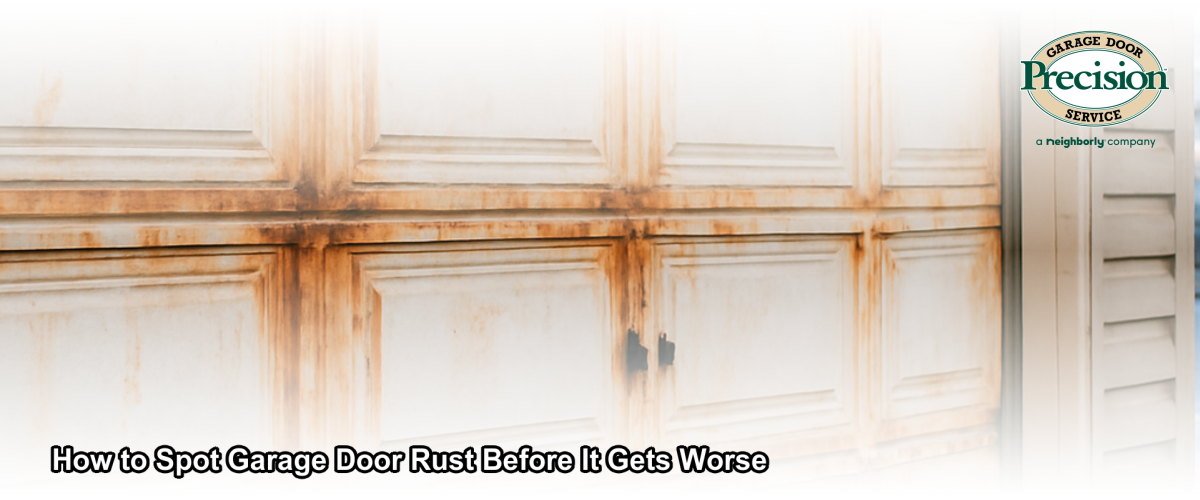
The earliest signs of rust on a garage door include small orange or reddish-brown spots on panels, white chalky streaks at seams and joints, and a faint metallic smell when the door is in motion. These are easy to miss during a quick glance, but they matter — catching corrosion at this stage is the difference between a simple maintenance fix and a full door replacement.
Walk up close to your door in natural light and look for these specific indicators:
- Small pitting or bubbling in the paint surface, often along the bottom panel or near the weatherstripping
- Orange or brown staining on or around hinges, roller brackets, and cable drums
- White or chalky residue at seams where two panels meet (especially after rain)
- Visible flaking or peeling paint, which signals the metal underneath is already reacting
- Discoloration along the bottom edge, where water pools and sits longest
If you see any of these signs, note how widespread they are. A few isolated spots caught early are manageable. Rust that has spread across multiple panels or deep into the hardware may require a more significant repair or even full replacement — something Precision Door Service of Central and South Jersey has helped more than 140,000 homeowners evaluate over 25 years of local service.
Which parts of a garage door are most vulnerable to corrosion?
The bottom panel and all metal hardware — especially springs, cables, and hinges — are the most corrosion-prone parts of any garage door system. The bottom panel sits closest to the ground where moisture, snow melt, and road salt collect. Hardware components are often bare or lightly coated steel that loses its protective finish faster than the door panels themselves.
Here is a quick breakdown of what to check and why each spot matters:
- Bottom panel: Constantly exposed to water runoff, puddles, and dirt. Rust here is most common and spreads upward if untreated.
- Springs: Torsion and extension springs are high-tension components. Surface rust weakens metal fatigue resistance and can contribute to premature spring failure — a safety hazard, not just a cosmetic issue.
- Cables: Fraying and rust on lift cables often develop together, since corroded strands break down faster under load. Inspect cables regularly, as covered in our garage door safety inspection overview.
- Hinges and rollers: Rust on hinges causes stiff, grinding movement. Corroded rollers increase friction on the tracks and strain your opener motor.
- Tracks: Interior track surfaces can rust when moisture collects in the channel, creating resistance and throwing the door off alignment over time.
What does garage door rust look like versus normal wear?
Rust appears as orange, red-brown, or dark brown discoloration on metal surfaces, often accompanied by pitting, flaking, or surface roughness — normal wear, by contrast, looks like faded paint, minor scuffs, or dents with no discoloration. The distinction matters because normal surface wear is cosmetic, while rust is structural and progressive.
A simple test: run your finger across a suspicious spot. If it leaves an orange-red residue on your fingertip or feels rough and pitted rather than smooth and chipped, you are looking at active corrosion, not just age. On hardware like springs and cables, rust typically appears as a reddish-brown film that coats the surface unevenly, sometimes combined with visible pitting or surface flaking under close inspection.
What type of garage door material holds up best near the ocean or bay in New Jersey?
For homeowners in coastal communities like Brick, Point Pleasant, Manahawkin, and Point Pleasant Beach, steel doors with a galvanized or aluminum-coated finish — or composite and fiberglass doors — hold up significantly better than standard steel in salt-air environments. This is one of the most common questions our team fields from Ocean and Monmouth County residents, and the answer depends on how close to the water you are and what your budget allows.
Precision Door Service of Central and South Jersey installs new garage doors from leading manufacturers including Amarr, C.H.I., Clopay, and Fimbel, all of which offer material and finish options rated for coastal exposure. If you are unsure what is right for your home, we offer free estimates and will walk you through every option — no pressure, just honest guidance. That is what being customer-first means to us.
Can I treat rust on a garage door myself, or do I need a professional?
Surface rust on garage door panels can often be treated by a homeowner using a rust-neutralizing primer and touch-up paint, but corrosion on mechanical hardware — springs, cables, and rollers — should always be assessed by a professional before you attempt any adjustment or lubrication. Mishandling a rusted torsion spring in particular is genuinely dangerous, as these components store significant tension.
For panel rust caught early, a reasonable DIY approach looks like this: sand the affected area lightly, apply a rust converter or neutralizer, prime the bare metal, and repaint with an exterior-grade paint matched to your door color. However, if rust has penetrated through the panel or the affected area is larger than a few square inches, replacement of that section or the full panel is usually more cost-effective than a patch.
For any hardware corrosion, the right move is a professional safety inspection. Precision Door Service of Central and South Jersey performs comprehensive safety inspections that cover every mechanical component — not just the part that caught your eye. Our experienced technicians explain what they find in plain language and only recommend what is genuinely needed. We do the right thing for the customer, every time.
What hidden costs or additional issues should I expect when dealing with garage door rust?
When rust is visible on the surface, there is almost always secondary damage that is not immediately obvious — and understanding what to budget for prevents unpleasant surprises. Here is what Precision Door Service technicians commonly find alongside rust when performing inspections across Ocean, Monmouth, Mercer, and Middlesex Counties:
- Weatherstripping deterioration: The rubber seal at the bottom of your door traps moisture against the bottom panel. If the seal has cracked or shrunk, water has likely been sitting against the metal longer than you realize, and replacement of both the seal and the rusted panel section is often needed together.
- Opener strain: A door with corroded, stiff hardware puts extra load on the opener motor. If rust has gone unaddressed for a season or more, the opener may have accumulated wear beyond its normal cycle count — worth having checked at the same visit.
- Track realignment: Rust-related friction and component stiffness can pull the door off its track alignment. Realignment is a straightforward fix when caught early but worsens quickly if ignored.
- Spring and cable lifespan reduction: Surface corrosion accelerates metal fatigue. Springs and cables that might otherwise last their expected service life may need earlier replacement once significant rust has formed.
Being aware of these possibilities upfront is not meant to alarm you — it is exactly the kind of honest, transparent guidance we have built our reputation on for more than 25 years serving Central and South Jersey homeowners.
How often should I inspect my garage door for rust and corrosion?
Inspect your garage door for rust and corrosion at least twice a year — once in spring after winter road salt and freeze-thaw exposure, and once in fall before the wet season sets in. Homeowners within a few miles of the coastline or bay in Ocean and Monmouth Counties should inspect quarterly, given the accelerated oxidation from salt air.
A good inspection takes less than ten minutes and can save you significantly in repair costs. Walk the perimeter of the door in good light, check all visible hardware, run the door through a full open-and-close cycle, and listen for grinding or scraping sounds that suggest corroded components are creating friction. Our full maintenance guide goes deeper into what to look for at each seasonal inspection — and if anything looks questionable, our team is here when you need us, anytime, every time.
Precision Door Service of Central and South Jersey also offers professional garage door maintenance and safety inspections for homeowners who want an expert set of eyes on every component — not just the parts they can see from the driveway. Locally serving Central and South Jersey since 2000, our certified technicians bring that experience to every home visit.
Frequently Asked Questions
How can I tell if my garage door has rust starting to form?
Look for small orange or reddish-brown spots on panels, especially along the bottom edge and at seams. Check hardware like hinges and springs for a rough, discolored film. Bubbling or peeling paint is also an early sign that rust is forming underneath the surface.
What type of garage door is best for coastal New Jersey near the ocean?
For homes near the ocean or bay in communities like Brick, Point Pleasant, or Manahawkin, doors with galvanized steel, aluminum-coated finishes, fiberglass, or composite materials resist salt-air corrosion far better than standard steel. Precision Door Service offers free estimates and can recommend the right material for your specific location.
Is it safe to lubricate a rusted garage door spring myself?
No — rusted springs should be inspected by a professional before any lubrication or adjustment is attempted. Torsion springs are under high tension, and corrosion weakens their structural integrity in ways that are not always visible. A professional inspection is the safest first step.
How often should I have my garage door professionally inspected for corrosion and wear?
Most homeowners in Central and South Jersey should schedule a professional safety inspection once a year, with coastal homeowners ideally doing so every six months. Precision Door Service performs comprehensive inspections that cover springs, cables, rollers, tracks, hardware, and the door panels themselves.
Does Precision Door Service repair rusty or damaged garage doors the same day?
In many cases, yes — Precision Door Service technicians carry high-quality replacement parts and aim to complete repairs at the time of the service visit. The technician will perform a full safety inspection, explain what is needed, and complete the work on the spot whenever parts are available.