Should I Repair or Replace My Garage Door?
If your garage door is struggling to open, looks noticeably worn, or keeps breaking down despite recent repairs, it may be time to replace it rather than invest more money in fixes. Repair is usually the right call for isolated problems — a broken spring, a worn roller, a damaged cable. Replacement makes more financial and practical sense when the door itself is structurally compromised, repeatedly failing, or simply too old to perform reliably.
At Precision Door Service of Central & South Jersey, our experienced technicians have helped more than 140,000 homeowners across Ocean, Monmouth, Mercer, and Middlesex Counties make exactly this call — and our approach is always to do the right thing for the customer, not push a sale. Here is how to read the signs clearly.
How Old Is Too Old for a Garage Door?
Most residential garage doors have a functional lifespan of 15 to 30 years, depending on material, usage, and maintenance history. A steel door that has been regularly lubricated and inspected can outlast a neglected wood door by a decade or more. If your door is approaching or past the 20-year mark and is showing any of the warning signs below, the math typically favors replacement over continued repair.
Age alone is not a disqualifier — but age combined with wear is. Our maintenance guide covers how routine tune-ups can extend a door’s life significantly; a door that has never been serviced ages much faster than one that has.
What Are the Physical Signs That a Garage Door Needs to Be Replaced?
Visible structural damage is one of the clearest indicators that replacement is warranted. Specifically, watch for:
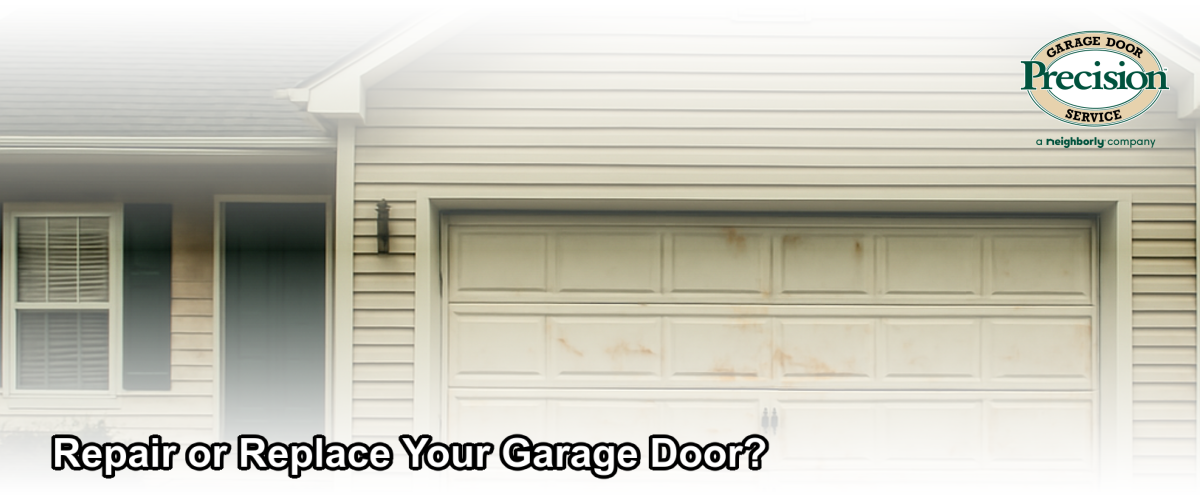
- Severe dents or cracks that affect the door’s panel alignment or structural integrity — not cosmetic dings, but damage that causes the door to bind or sit unevenly in the track.
- Widespread rust or rot that has moved beyond the surface into the panel material itself, especially on steel or wood doors exposed to Ocean County’s salt air and coastal humidity.
- Warping on wood doors that prevents a proper seal at the bottom, letting in drafts, pests, and water — a common issue in homes near Barnegat Bay or the Jersey Shore.
- Sagging sections where the door no longer moves as a unified panel, signaling that internal framing or the panel structure itself has broken down.
Cosmetic damage — a small dent, minor fading, surface scratches — does not justify replacement on its own. But when damage affects how the door functions or seals, that changes the calculation entirely.
How Many Repairs Is Too Many Before You Should Just Replace the Door?
A useful rule of thumb is the 50% rule: if the cost of a repair (or your cumulative repair costs over the past year or two) exceeds 50% of what a comparable new door would cost, replacement is the smarter long-term investment. Paying $400–$600 to repair a door that would cost $900–$1,200 installed may feel economical in the moment, but if the same door needs another repair six months later, you have spent replacement money without getting a new door.
Precision Door Service of Central & South Jersey offers free estimates on new garage door installation, so you can get an honest, side-by-side comparison before making any decision. We will never recommend replacement when a repair will genuinely solve the problem — that is what it means to earn a customer’s business rather than just chase a transaction.
What Hidden Costs Should I Expect With a Full Garage Door Replacement?
A replacement quote typically includes the door panels, hardware, springs, and installation labor. However, there are a few additional items worth asking about upfront so there are no surprises:
- Opener compatibility: If your current opener is older, a new door with a different spring tension or weight may not operate correctly with the existing motor. In some cases, an opener upgrade is recommended at the same time.
- Track and hardware condition: Tracks, cables, and bottom brackets that are badly worn or bent should be replaced alongside the door, not left in place — a new door on compromised hardware is a problem waiting to happen.
- Insulation upgrades: Many homeowners in Monmouth and Middlesex Counties choose to upgrade to an insulated door when replacing, which adds to the upfront cost but meaningfully reduces energy loss through an attached garage.
- Disposal of the old door: Ask whether old door removal and haul-away are included in the quote.
Our technicians walk through every line item before any work begins, clearly explaining what is needed and why — no surprises, no pressure.
What Type of Garage Door Material Is Best for Homes Near the Ocean or Bay?
For homeowners in Brick, Point Pleasant, Manahawkin, and other coastal communities in Ocean County, material selection matters more than it does inland. Salt air accelerates corrosion on untreated steel and causes wood to rot and warp more rapidly. The most durable options for coastal New Jersey homes include:
- Galvanized or rust-resistant steel with a factory-applied finish — look for doors rated for coastal exposure.
- Fiberglass or composite doors, which resist moisture and salt air better than wood and do not rust like bare steel.
- Aluminum doors with a powder-coated finish — lightweight and corrosion-resistant, though they dent more easily than steel.
Precision Door Service installs doors from leading manufacturers including Amarr, C.H.I., Clopay, and Fimbel — all of which offer material and finish options specifically suited to high-humidity, coastal environments. Our door specialists can walk you through which product line fits your home’s exposure and your budget.
Can I Tell From My Garage Door’s Performance Alone That It Needs Replacement?
Yes — how a door behaves is often as telling as how it looks. Performance warning signs that frequently point toward replacement rather than a simple repair include:
- The door shakes, jerks, or makes loud grinding or scraping noises during operation that persist even after lubrication and adjustment.
- The door moves unevenly — one side rises or falls faster than the other — despite proper spring and cable servicing.
- The door reverses unexpectedly or refuses to close fully, and the issue is not traced to the opener, safety eyes, or tracks.
- The door takes noticeably longer to open and close than it once did, a sign that the panels, hinges, or overall weight distribution has changed due to accumulated damage.
A single symptom is usually a repair. Multiple symptoms on a door with significant age or structural wear is a replacement conversation. When one of Precision Door Service’s Certified Technicians comes out, they perform a comprehensive safety inspection first — so you get an honest diagnosis before any recommendation is made.
Will a Technician Be Able to Tell Me the Same Day Whether I Need a Replacement?
In most cases, yes. Precision Door Service of Central & South Jersey sends experienced technicians who carry a wide inventory of parts and can diagnose the door’s condition during the same visit. If repair is the right answer, many repairs can be completed the same day. If the inspection reveals that replacement is the better path, the technician will explain why, provide a clear estimate, and walk you through your new door options — no pressure, no rush.
We are here when you need us, anytime, every time, and have been locally serving Central & South Jersey since 2000. Free estimates for new door installation are available, and financing is offered through GreenSky with a simple online application for qualified customers.
Frequently Asked Questions
Should I repair or replace my garage door?
Repair is the right call for isolated problems like a broken spring or worn rollers. Replacement makes more sense when the door is structurally damaged, repeatedly breaking down, or when cumulative repair costs are approaching 50% of a new door’s price. A Certified Technician from Precision Door Service can diagnose which makes sense during the same visit.
How long do garage doors last before they need to be replaced?
Most residential garage doors last between 15 and 30 years, depending on material, maintenance history, and local climate conditions. Doors in coastal areas of Ocean County, NJ tend to age faster due to salt air and humidity, making regular maintenance especially important.
What type of garage door material is best for homes near the ocean in New Jersey?
For coastal communities like Brick, Point Pleasant, and Manahawkin, galvanized rust-resistant steel, fiberglass, or powder-coated aluminum are the most durable choices because they resist salt air corrosion and moisture better than untreated wood or bare steel.
Does Precision Door Service offer free estimates for new garage door installation?
Yes. Precision Door Service of Central & South Jersey offers free estimates on new residential garage door installation, with no obligation. Financing is also available through GreenSky for qualified customers.
How many repairs should I pay for before replacing my garage door?
A practical guideline is the 50% rule: if your repair cost — or your total repairs over the past year or two — exceeds half the cost of a comparable new door installed, replacement is typically the smarter long-term investment. Your technician can help you compare the two options side by side.