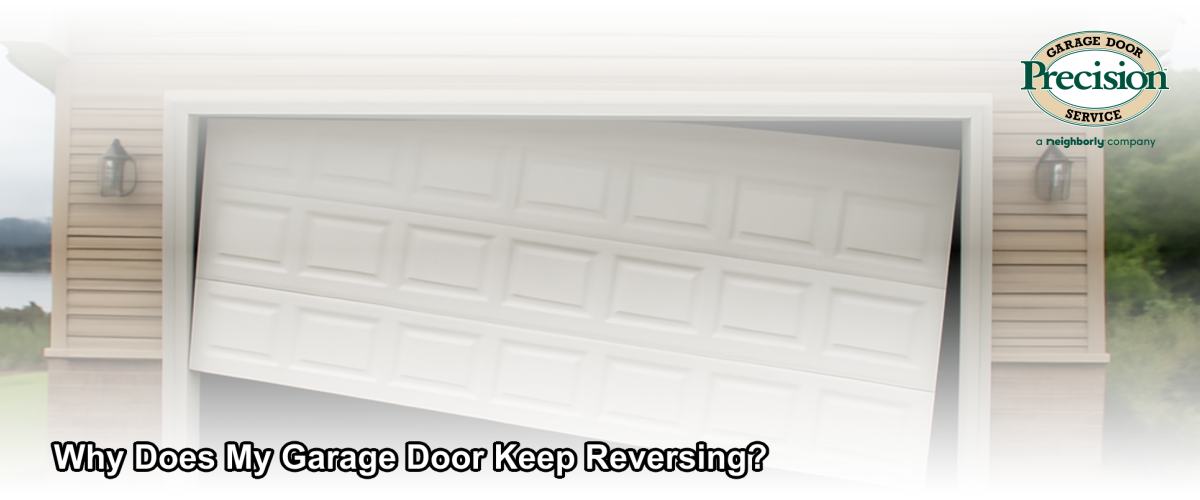
Why does my garage door reverse before it closes all the way?
A garage door that reverses before fully closing is almost always reacting to one of three things: a blocked or misaligned safety sensor, an incorrect limit setting on the opener, or a mechanical resistance the opener interprets as an obstruction. All three are fixable — and identifying the right cause quickly prevents unnecessary wear on your system.
At Precision Door Service of Central & South Jersey, our experienced technicians diagnose this problem every week across Ocean, Monmouth, Mercer, and Middlesex Counties. Here is exactly what to look for.
Are misaligned safety eyes the most common reason a garage door reverses?
Yes — misaligned or obstructed photo-eye sensors (sometimes called safety eyes) are the single most common reason a garage door reverses unexpectedly. These two small sensors sit near the bottom of the door tracks on either side of the opening. They project an invisible infrared beam across the door opening; if anything interrupts that beam — a misaligned sensor, a cobweb, a leaf, or even direct sunlight hitting the lens — the opener reads it as a blocked door and immediately reverses.
You can often spot the problem yourself: look at the sensor lenses while the door is trying to close. A solid green light on the receiving sensor means the beam is clear. A blinking or amber light means something is off. Gently wipe the lenses with a dry cloth and check that both sensors point directly at each other. If the issue persists after cleaning and realignment, the sensors themselves may need replacement — a quick, affordable repair our certified technicians handle same-day in most cases across Brick, Toms River, Point Pleasant, and surrounding areas.
Can incorrect limit settings cause a garage door to reverse?
Yes — if your opener’s close-limit setting is off, the door may reverse just before it reaches the floor because the opener thinks the door has hit an obstruction. The close-limit setting tells the motor exactly how far the door needs to travel to reach the fully closed position. If that number is set too high, the door contacts the ground but the motor keeps pushing, senses resistance, and reverses as a safety precaution.
Limit adjustments are typically made via small dials or digital settings on the back of the opener unit. The process varies by brand — LiftMaster and Genie openers, both of which Precision Door Service installs and services, each have their own adjustment method. If you are not comfortable working on the opener directly, this is an easy fix for a technician and is often resolved in a single visit.
What role does door balance play in unexpected reversals?
A garage door that is out of balance puts extra strain on the opener motor. When the motor detects more resistance than expected — because worn or broken springs are no longer doing their share of the lifting — it interprets that strain as an obstruction and triggers a reversal. An out-of-balance door is also a sign that your springs are approaching the end of their lifespan.
You can do a quick balance test: disconnect the opener by pulling the red emergency release cord, then manually lift the door to about waist height and let go. A properly balanced door stays in place or moves only slightly. If it slams down or flies up, the spring tension needs adjustment. Spring adjustment and replacement should always be performed by a professional — torsion springs are under significant tension and can cause serious injury if handled incorrectly. As covered in our spring replacement guide, Precision Door Service uses high-quality replacement parts and performs a comprehensive safety inspection with every spring repair.
Can weather or temperature affect why my garage door reverses?
Absolutely — and this is especially relevant for homeowners in Central and South Jersey, where winters bring freezing temperatures and coastal communities near the shore deal with humidity and salt air year-round. Cold weather causes metal components to contract, which can make tracks slightly narrower and increase rolling resistance. It can also cause the bottom seal to freeze or stick to the garage floor, creating the same resistance-triggered reversal the opener is designed to produce.
Salt air from areas near the Atlantic coast accelerates corrosion on tracks, rollers, and hardware, adding friction the opener has to work against. Regular lubrication and maintenance — especially heading into winter — can prevent these weather-related reversals. If you live near the bay or ocean in communities like Point Pleasant Beach, Manasquan, or along the Barnegat Peninsula, seasonal maintenance is not optional; it is the difference between a garage door that lasts and one that fails prematurely. See our full maintenance guide for recommended lubrication schedules and products.
Could the problem be with my garage door opener itself?
Yes — the opener’s sensitivity or force settings may need adjustment, or the unit itself may be aging past its reliable service life. Garage door openers have a built-in force adjustment that controls how much resistance triggers a reversal. If this setting is too sensitive, the door may reverse from even minor friction. If it is set too low, the door may not reverse when it should — a genuine safety hazard.
Most quality openers from LiftMaster and Genie allow you to adjust both the up-force and down-force settings independently. However, if your opener is older and these adjustments no longer hold, or if the motor itself is inconsistent, replacement may be more cost-effective than ongoing repairs. Precision Door Service of Central & South Jersey installs openers with options including belt-drive, chain-drive, wall-mounted, battery backup, and Wi-Fi connectivity — and our door specialists can help you choose the right model for your home and budget.
What hidden costs or additional repairs should I expect when fixing a reversing garage door?
Most reversal issues are isolated to one cause, but a comprehensive safety inspection sometimes turns up related wear that should be addressed at the same visit. Here is what to be aware of:
- Sensor replacement — If cleaning and realignment do not fix misaligned safety eyes, the sensors themselves need replacing. This is a straightforward, low-cost part.
- Spring replacement — If a balance issue is causing the reversal, worn springs are likely the root cause. Addressing springs proactively is almost always less expensive than an emergency call after a full failure.
- Track realignment or roller replacement — Worn rollers or slightly bent tracks add friction that can trigger false reversals. Our technicians inspect both as part of every service visit.
- Opener adjustment or replacement — Limit and force adjustments are typically included in a standard service call. Full opener replacement is a separate line item but often qualifies for financing through GreenSky with an online application.
Precision Door Service performs a comprehensive safety inspection on every visit, so you get a full picture of your door’s condition — not just a patch on the immediate symptom. We believe in honest recommendations and doing the right thing for the customer, not upselling parts you do not need.
When should I call a professional instead of troubleshooting a reversing garage door myself?
Call a professional immediately if the reversal is accompanied by grinding, loud popping, a visibly bent track, or a broken spring. These are not DIY scenarios. You should also call if cleaning the sensors and checking the limit settings does not resolve the problem — chasing the wrong cause costs time and can create a safety risk if the door is left in an unreliable state.
Precision Door Service of Central & South Jersey has been locally serving Central & South Jersey since 2000, with more than 140,000 homeowners helped across Ocean, Monmouth, Mercer, and Middlesex Counties. Our technicians are here when you need us, anytime, every time — including same-day service in most cases. Call us at 732-836-9090 or visit precisiongaragedoorsnj.com to schedule a visit. Precision is always the right decision.
This guide was prepared by the experienced technicians at Precision Door Service of Central & South Jersey, proudly serving Brick, Toms River, Point Pleasant, Freehold, Princeton, and communities throughout Central and South Jersey.
Frequently Asked Questions
Why does my garage door go back up right after I close it?
The most likely causes are blocked or misaligned safety-eye sensors near the base of the tracks, an incorrect close-limit setting on the opener, or an out-of-balance door creating resistance the motor interprets as an obstruction. Start by checking that both sensor lights are solid and the lenses are clean. If that does not fix it, a technician can diagnose the remaining cause in a single visit.
Can cold weather make a garage door reverse on its own?
Yes. Freezing temperatures can cause the bottom seal to stick to the garage floor or make metal components contract enough to increase track friction — both of which trigger the opener’s safety reversal. In coastal Central and South Jersey, salt air adds corrosion to that equation, making seasonal lubrication and maintenance especially important.
Is a garage door that reverses a safety hazard?
It depends on the cause. If the reversal is triggered by working safety sensors doing their job, that is the system functioning correctly. But if the door reverses due to a failing spring, bent track, or faulty opener, the underlying condition can become dangerous — especially if the reversal stops working altogether. Have it inspected promptly.
How do I know if my garage door springs are causing the reversal?
Disconnect the opener using the red emergency release cord and manually lift the door to waist height, then let go. If the door drops instead of staying in place, the springs are not providing enough counterbalance — and that extra motor load is likely what is triggering the reversal. Spring adjustment or replacement should always be done by a professional.
Does Precision Door Service fix garage door reversing problems the same day?
In most cases, yes. Precision Door Service of Central and South Jersey carries high-quality replacement parts on their service vehicles and aims to complete repairs the same day a technician comes out, serving homeowners across Ocean, Monmouth, Mercer, and Middlesex Counties. Call 732-836-9090 to schedule.