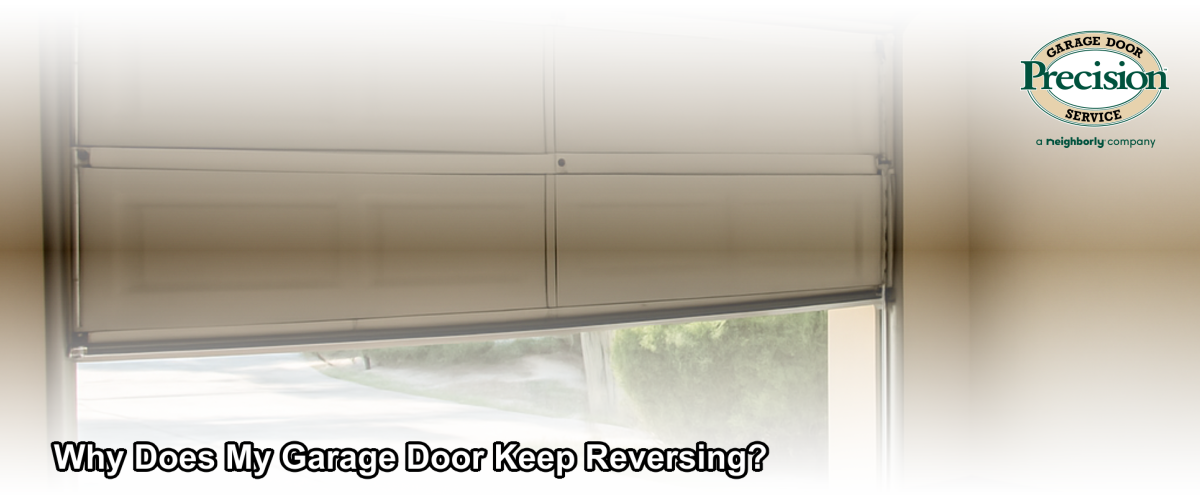
Why does my garage door reverse right after I close it?
A garage door that reverses immediately after touching — or just before reaching — the floor almost always has a travel limit setting that is calibrated too short, causing the opener to interpret normal contact with the ground as an obstruction and reverse as a safety response. This is one of the most common service calls Precision Door Service of Central & South Jersey receives from homeowners in Brick, Toms River, and throughout Ocean and Monmouth Counties.
The travel limit tells your opener exactly how far the door needs to travel to reach the fully closed position. When that number is off — even by a small amount — the motor senses unexpected resistance and triggers the auto-reverse feature. The good news is that an experienced technician can adjust this setting in minutes during a same-day visit.
What are safety eyes, and can they cause a garage door to reverse unexpectedly?
Yes — misaligned or dirty safety eyes (also called photo-eye sensors) are one of the leading causes of unexpected garage door reversal, and they are among the first things Precision Door Service technicians inspect during a service call. The safety eyes are two small sensors mounted near the bottom of the door tracks on each side; they project an invisible beam across the opening, and if anything interrupts that beam — a leaf, a spider web, sunlight hitting the lens at a sharp angle, or a sensor knocked slightly out of alignment — the opener immediately reverses the door as a federal safety requirement.
In Central and South Jersey, seasonal debris, lawn equipment bumps, and the humidity that comes off Barnegat Bay and the Atlantic coastline can all affect sensor performance. Checking the sensors for a solid, steady indicator light on both units is the quickest first diagnostic step. If one light is blinking or off entirely, the sensors need to be cleaned, realigned, or replaced before the door will operate correctly.
Could a broken or worn spring cause my garage door to reverse?
A broken or significantly weakened torsion spring can absolutely cause a garage door to reverse, because the opener’s built-in force settings are calibrated for a properly balanced door — when a spring fails, the door becomes dramatically heavier and the opener detects that resistance as an obstruction. Garage doors in New Jersey experience real wear from temperature swings between harsh winters and humid summers, which accelerates spring fatigue over time.
You can perform a quick balance test: disconnect the opener by pulling the red emergency release cord, then manually lift the door to about waist height and let go. A properly balanced door stays in place; one that drops quickly is working against a worn or broken spring. Do not continue operating a door with a suspected broken spring — the cables and other hardware are under high tension and should only be handled by certified technicians. Precision Door Service of Central & South Jersey carries high-quality replacement springs and can typically complete spring repairs the same day a technician arrives.
Can the opener’s force or sensitivity settings make a garage door reverse?
Yes — if the opener’s close-force setting is adjusted too low, the door will reverse whenever it encounters even minor friction from worn rollers, a slightly bent track, or stiff hinges, because the motor reaches its force threshold before the door fully closes. Most modern LiftMaster and Genie openers have separate adjustment dials or digital settings for open force, close force, and travel limits, all of which interact with each other.
Incorrectly set sensitivity is equally common after a power surge or after someone has tried a DIY adjustment without understanding how the settings interact. As covered in our garage door opener repair and installation guide, Precision Door Service technicians are trained on LiftMaster and Genie systems and can calibrate all settings to manufacturer specs during a standard service call across our entire service area — from Princeton and Hightstown in Mercer County to Point Pleasant Beach and Manahawkin along the Jersey Shore.
Do worn rollers or a damaged track cause a garage door to reverse?
Worn rollers and bent or misaligned tracks create friction and binding that an opener interprets as an obstruction, triggering a reversal — especially on older doors where the original steel rollers have lost their nylon coating or developed flat spots. Brick Township and the surrounding coastal communities see accelerated corrosion on metal hardware due to salt air exposure, which makes roller and track maintenance especially important for homeowners near the water.
Signs of a track or roller problem include a grinding or scraping sound as the door moves, visible wobbling, or a door that hesitates and then reverses at the same point in its travel every time. Our maintenance and safety inspection service is specifically designed to catch these issues before they cause a full breakdown — see our full guide to preventative garage door maintenance for what a comprehensive tune-up includes.
What hidden issues should I know about if my door keeps reversing?
Beyond the most obvious causes, a few less-expected factors are worth knowing before a technician arrives, because they affect both the diagnosis and the final cost of the repair.
- Frayed or loose cables: Cables work in tandem with springs to carry the door’s weight. A fraying cable can cause uneven travel that triggers the auto-reverse — and a snapped cable is a safety emergency.
- Logic board failure: In older openers, the circuit board that interprets sensor and limit signals can degrade, sending false obstruction signals even when everything mechanical is fine.
- Weather stripping obstruction: A swollen or torn bottom seal can create just enough resistance at the floor to trick the opener into reversing, especially after a wet New Jersey winter.
- Interference from bright sunlight: Photo-eye sensors can be temporarily blinded by direct afternoon sun — a surprisingly common complaint from homeowners in south-facing garages along the Jersey Shore each spring and summer.
During every service call, Precision Door Service of Central & South Jersey technicians perform a comprehensive safety inspection, not just a fix of the single reported symptom. That means you get an honest assessment of every component — springs, cables, rollers, tracks, hardware, opener, and sensors — so there are no surprise failures a month after we leave.
Should I try to fix a reversing garage door myself, or call a professional?
Cleaning the photo-eye sensors and checking their alignment is a safe DIY first step that takes about five minutes and costs nothing. Beyond that, garage door repair — particularly anything involving springs, cables, or opener force settings — should be left to experienced technicians. Torsion springs store an enormous amount of mechanical energy and can cause serious injury if handled incorrectly.
Precision Door Service of Central & South Jersey has been locally serving Central & South Jersey since 2000 and has helped more than 140,000 homeowners with exactly these repairs. Our technicians are here when you need us, anytime, every time — including 24/7 availability for urgent situations. We show up on time, clearly explain what we find, and do the right thing for the customer rather than recommending repairs that aren’t necessary.
How much does it cost to fix a garage door that keeps reversing?
The cost depends entirely on the root cause: a simple sensor realignment or travel limit adjustment is among the least expensive garage door repairs, while a broken torsion spring replacement, cable repair, or opener logic board replacement will carry a higher cost. Precision Door Service of Central & South Jersey offers free estimates for new door installations, and our technicians provide a clear explanation of recommended repairs and pricing before any work begins — so you never face surprise charges.
Financing is available through GreenSky with an easy online application, which makes it straightforward to address multiple issues — such as replacing both the springs and upgrading to a new LiftMaster belt-drive opener with Wi-Fi connectivity — in a single visit rather than putting off repairs that could become safety hazards. Payment is accepted by all major credit cards, check, or cash.
This guide was prepared by the experienced technicians at Precision Door Service of Central & South Jersey, trusted local garage door experts serving Ocean, Monmouth, Mercer, and Middlesex Counties from our offices in Brick and Milltown, NJ.
Frequently Asked Questions
Why does my garage door reverse before it hits the floor?
The most common reasons are a miscalibrated travel limit setting, misaligned or dirty photo-eye sensors, or a close-force setting that is too low. All three cause the opener to interpret normal door movement as an obstruction and trigger the auto-reverse safety feature. A technician can diagnose and correct any of these issues during a same-day visit.
Can a broken garage door spring cause the door to reverse?
Yes. A broken or weak spring makes the door much heavier than the opener expects, so the motor hits its force limit and reverses as a safety response. Do not operate a door with a suspected broken spring — the system is under high tension and requires a professional repair.
How do I know if my garage door safety eyes are causing the reversal?
Check the small sensor lights near the bottom of each track. A steady green or amber light on both units means the beam is clear; a blinking or off light indicates misalignment, dirt, or damage. Clean the lenses with a dry cloth and gently redirect them until both lights are solid — if the problem persists, the sensors likely need professional realignment or replacement.
Does Precision Door Service of Central and South Jersey offer same-day garage door repair?
Yes. Precision Door Service of Central and South Jersey offers same-day repair and is available 24/7 for urgent situations, serving homeowners across Ocean, Monmouth, Mercer, and Middlesex Counties from offices in Brick and Milltown, NJ.
How often should I have my garage door inspected to prevent unexpected reversals?
Annual preventative maintenance and safety inspections are recommended to catch worn rollers, weakening springs, fraying cables, and sensor drift before they cause operational failures. Coastal New Jersey homeowners near salt air environments may benefit from more frequent checks due to accelerated hardware corrosion.