What is a jackshaft garage door opener?
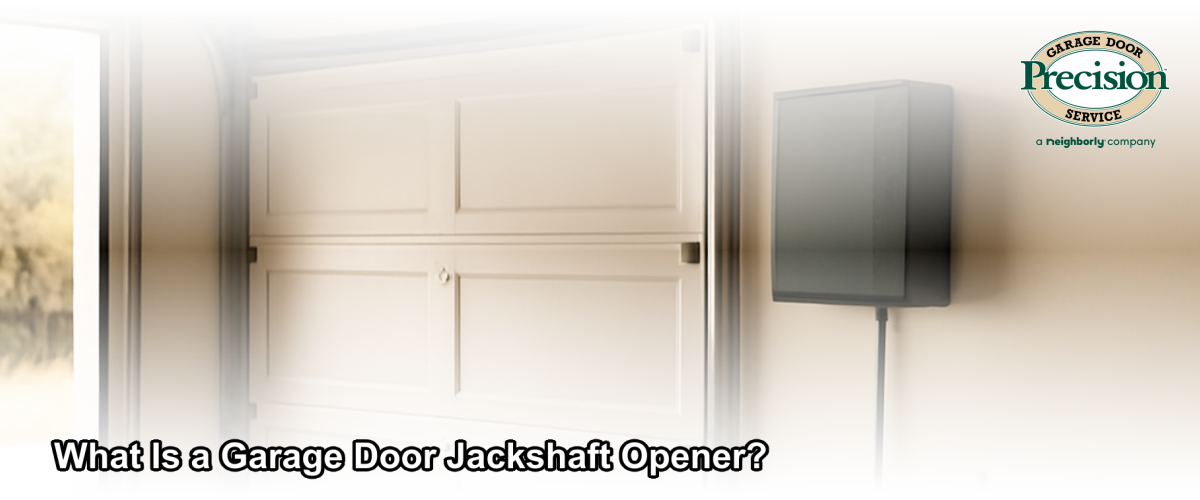
A jackshaft opener — sometimes called a wall-mounted opener — is a type of garage door opener that mounts to the wall beside the door rather than to a overhead rail running down the center of the ceiling. Instead of moving a trolley along a track, it drives the torsion bar directly to raise and lower the door. This design frees up the entire ceiling of your garage and eliminates the need for a long center-mounted rail entirely.
At Precision Door Service of Central & South Jersey, our experienced technicians install and service wall-mounted openers — including LiftMaster jackshaft models — for homeowners across Ocean, Monmouth, Mercer, and Middlesex Counties. If you’ve heard about jackshaft openers and want to know whether one makes sense for your home, this guide covers everything you need to know.
How does a jackshaft opener work?
A jackshaft opener works by connecting directly to the torsion shaft — the horizontal steel bar that runs through your door’s spring system above the door opening. An electric motor housed in a compact wall-mounted unit turns a drive mechanism that rotates the torsion shaft, which winds or unwinds the springs to lift and lower the door. Because the motor does its work at the side wall rather than above center, no overhead rail is required.
Most modern jackshaft openers use a DC motor with a belt or gear drive, making them notably quieter than older chain-drive ceiling-mounted units. LiftMaster’s 8500 series — one of the most widely installed jackshaft openers — also includes built-in Wi-Fi connectivity, allowing you to monitor and control your door remotely through a smartphone app.
What type of garage is a jackshaft opener best suited for?
Jackshaft openers are best suited for garages with low ceilings, high ceilings with exposed beams or stored items overhead, or garages equipped with high-lift, vertical-lift, or cathedral-style door tracks where a standard rail-mounted opener simply won’t fit. They work exclusively with sectional doors that have a torsion spring system — they are not compatible with one-piece tilt-up doors or doors with extension springs only.
In Central and South Jersey, many homeowners in communities around Brick, Toms River, Point Pleasant, and Middletown have garages used as workshops, gym spaces, or boat storage — situations where maximizing overhead clearance is a real priority. A jackshaft opener makes that ceiling space fully usable while still delivering reliable, daily operation.
What are the advantages of a jackshaft opener compared to a traditional opener?
The most significant advantages of a jackshaft opener over a standard overhead opener are ceiling clearance, quieter operation, and a cleaner installation with fewer components hanging overhead. Additional benefits include:
- Full ceiling use — no rail means overhead storage, lifts, and lighting can be positioned anywhere.
- Quieter performance — direct-drive or belt-gear mechanisms produce less vibration and noise than chain-drive rail systems.
- Compatibility with difficult door configurations — high-lift, vertical-lift, and follow-the-roof track systems that block standard rail placement are no obstacle.
- Battery backup availability — models like the LiftMaster 8500W include battery backup so your door works even during a power outage.
- Wi-Fi and smart home integration — built-in connectivity lets you open, close, and monitor your door from anywhere.
Are there any drawbacks or limitations to a jackshaft opener?
Yes — jackshaft openers are not the right fit for every garage, and it is important to understand their limitations before committing. The most significant limitation is compatibility: a jackshaft opener requires a sectional door with a torsion spring system, so homes with extension springs or non-sectional doors are generally not good candidates without additional hardware changes.
Jackshaft openers also tend to carry a higher upfront cost than a basic chain-drive ceiling-mounted unit. That said, the added features — quieter operation, battery backup, Wi-Fi, and the ceiling clearance itself — often justify the difference for homeowners who will actually use those benefits. If your garage has a standard ceiling height, a conventional rail-mounted opener may serve you just as well at a lower price point. As covered in our guide to choosing the right garage door opener, the best opener depends on your specific door, ceiling, and daily use — not a one-size-fits-all recommendation.
What does it cost to have a jackshaft opener installed in New Jersey?
The total installed cost for a jackshaft opener in Central and South Jersey varies depending on the specific model, your existing door hardware, and any wiring or spring system work required at the time of installation — so the most accurate answer comes from an in-home assessment rather than a flat number.
What you can expect as part of the installation process with Precision Door Service includes a thorough evaluation of your door’s torsion spring system, confirmation that your door is properly balanced (a critical safety step before any opener installation), professional mounting and wiring of the unit, programming of remotes and keypads, and a full safety inspection before the technician leaves. Our technicians use high-quality parts and explain every step of the work clearly — no surprises.
Precision Door Service of Central & South Jersey offers financing through GreenSky with a simple online application, so the upfront cost of a premium opener doesn’t have to be a barrier. Call our team at 732-836-9090 or visit precisiongaragedoorsnj.com to schedule a free estimate.
What hidden costs or extra steps should I expect during a jackshaft opener installation?
A few factors can add to the scope — and the cost — of a jackshaft opener installation that a basic quote might not immediately reflect. Being aware of them upfront is part of what it means to get an honest recommendation.
- Spring system condition — if your torsion springs are worn or improperly sized, they need to be addressed before an opener is installed. Running a new motor against a failing spring system shortens the life of both.
- Door balance — a door that isn’t balanced places excessive strain on any opener, including a jackshaft unit. Balancing may require spring adjustment or cable work.
- Electrical outlet availability — jackshaft openers need a standard outlet near the mounting location on the side wall; if one isn’t already there, an electrician may be needed.
- Track compatibility — while jackshaft openers are specifically useful for non-standard track configurations, the technician needs to verify that the existing track layout works with the chosen model.
Our technicians perform a comprehensive safety inspection before and after installation, so any related issues are identified and explained — not discovered later.
How long does a jackshaft garage door opener last?
A well-maintained jackshaft opener from a quality manufacturer like LiftMaster can be expected to last 10 to 15 years or more under normal residential use. The lifespan depends on how frequently the door cycles, how well the overall door system (springs, cables, rollers, and tracks) is maintained, and the quality of the original installation.
Because a jackshaft opener works directly through the torsion shaft and spring system, keeping those components in good shape is especially important. Our maintenance guide covers how often to lubricate and inspect your full door system — for most homeowners in the Ocean and Monmouth County area, an annual tune-up is the right interval, particularly given the coastal humidity and salt air that accelerate wear on metal hardware.
Is a jackshaft opener a good choice for a garage near the Jersey Shore?
A jackshaft opener can be an excellent choice for coastal New Jersey homes — but the opener itself is only one piece of the equation. Homes in Brick, Point Pleasant Beach, Toms River, and similar shore-area communities face elevated humidity, salt air, and corrosion exposure that affect all metal garage door components. The direct-drive mechanism of a jackshaft opener has fewer exposed moving parts than a rail-and-trolley system, which can be a modest advantage in a corrosive environment.
More important is choosing the right door, springs, and hardware materials for a coastal setting. Galvanized or stainless-steel hardware, rust-resistant springs, and regular lubrication with a product appropriate for salt-air exposure all matter more than the opener type alone. If you’re unsure what material is best for a garage door near the ocean or bay, that’s a common question our door specialists at Precision Door Service hear often — and it’s one worth answering before you invest in new equipment.
This guide was prepared by the experienced technicians at Precision Door Service of Central & South Jersey, locally serving Ocean, Monmouth, Mercer, and Middlesex Counties since 2000 from our offices in Brick and Milltown, NJ.
Frequently Asked Questions
What is the difference between a jackshaft opener and a regular garage door opener?
A regular garage door opener hangs from the ceiling on a rail and pulls a trolley to move the door. A jackshaft opener mounts to the wall beside the door and drives the torsion shaft directly, eliminating the overhead rail entirely and freeing up ceiling space.
Can a jackshaft opener be installed on any garage door?
No. Jackshaft openers require a sectional garage door with a torsion spring system. They are not compatible with one-piece tilt-up doors or doors that only use extension springs. A technician should assess your door before recommending this opener type.
Does a jackshaft opener work during a power outage?
Some jackshaft opener models, including the LiftMaster 8500W, include a built-in battery backup that allows the door to operate during a power outage. Not all models include this feature, so confirm battery backup capability when selecting a unit.
How much does it cost to install a jackshaft garage door opener in New Jersey?
The total installed cost varies based on the model chosen, the condition of your existing spring and hardware system, and any electrical work needed at the wall-mount location. Precision Door Service of Central and South Jersey provides free estimates — call 732-836-9090 or visit precisiongaragedoorsnj.com for a personalized quote.
Is a jackshaft opener quieter than a chain-drive opener?
Yes. Jackshaft openers use a direct-drive or gear-belt mechanism that produces significantly less noise and vibration than a chain-drive rail-mounted opener, making them a popular upgrade for attached garages or living spaces above the garage.