What is a garage door strut, and what does it do?
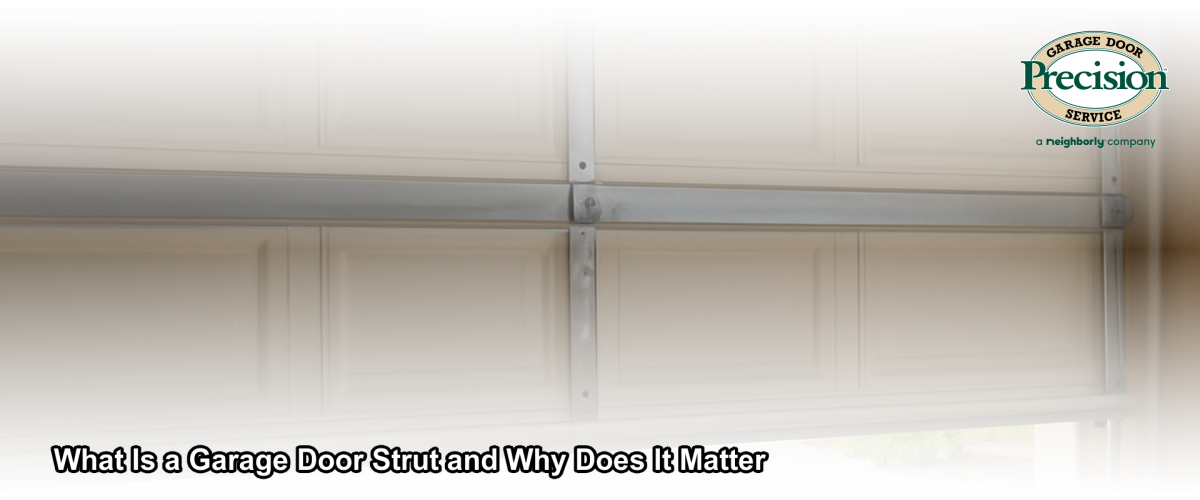
A garage door strut is a horizontal steel reinforcement bar that spans the width of a garage door panel, typically bolted across the top section, to keep the door rigid and prevent it from bending or bowing under stress. Without one, a standard garage door panel — especially a wide one — can flex dangerously when the opener pulls it up, when high winds push against it, or simply as the door ages and the panel weakens over time.
Think of a strut the way you’d think of the frame of a building: the door itself provides the exterior surface, but the strut provides the structural backbone. On a door without adequate reinforcement, that backbone is missing.
Why does a garage door strut matter for homes in Central and South Jersey?
In Ocean, Monmouth, Mercer, and Middlesex Counties — the heart of the service area for Precision Door Service of Central & South Jersey — garage doors face real seasonal stress that makes struts especially important. Coastal communities like Point Pleasant Beach, Brick, and Manahawkin regularly deal with nor’easters, high-wind events, and salt air that accelerates metal fatigue. Inland towns like Princeton, Freehold, and Piscataway aren’t exempt either: even a moderate storm can push lateral force against an unreinforced wide-panel door hard enough to cause it to rack or buckle.
A properly installed strut distributes that wind load evenly across the door’s width rather than concentrating stress at the center, where panels are most vulnerable. For homeowners near the ocean or bay, this isn’t an optional upgrade — it’s a functional necessity.
How can I tell if my garage door needs a strut?
The clearest sign that your garage door needs a strut — or that an existing strut has failed — is visible bowing or sagging in the top panel when the door is in the closed position or partway through its travel cycle. Other warning signs include:
- The top section of the door visibly flexes or vibrates when the opener engages
- The door makes a loud popping or cracking sound when opening or closing
- The top panel looks bent, warped, or no longer sits flush with the rest of the door
- The door binds or moves unevenly on its tracks
- Your garage door opener motor is straining more than usual
A bent or missing strut puts additional strain on your opener, your cables, and your springs — all of which have their own service life. As covered in our guides on garage door spring replacement and opener repair, problems in one component almost always accelerate wear in others. Catching a strut issue early is one of the best ways to avoid a larger repair bill later.
When is a strut required versus optional?
Struts are standard — not optional — on wider garage doors. Any single-car door wider than 9 feet and any double-car door (16 feet or wider) typically requires at least one strut across the top panel. Some installations call for a second strut on an additional panel below the top, depending on the door’s total height and the weight of the material.
Steel doors with insulated sandwich construction often have more inherent rigidity than non-insulated single-skin panels, but even insulated doors on a 16-foot or 18-foot opening benefit from strut reinforcement — particularly in high-wind zones or when a high-cycle opener is running the door multiple times per day. If your door was installed without the correct strut configuration, that’s something Precision Door Service’s experienced technicians will identify during a comprehensive safety inspection.
What happens if I ignore a damaged or missing strut?
Ignoring a missing or damaged strut is one of the more consequential decisions a homeowner can make, because the failure mode is rarely gradual — it’s sudden. A bowed top panel can snap mid-cycle, derailing the door from its tracks and disabling the entire system in one incident. In a high-wind event, an unreinforced door can buckle inward, which compromises the weatherseal, damages the door beyond repair, and in worst-case scenarios creates a structural hazard.
Beyond the immediate safety risk, a flexing door places uneven tension on your spring and cable system. Springs that are engineered to last 10,000 cycles under normal conditions wear out significantly faster when they’re compensating for a door that isn’t tracking straight. That’s a preventable cost.
Can I install or replace a garage door strut myself?
Strut replacement is not a recommended DIY project for most homeowners. While the strut itself is a simple steel component, it must be the correct length for your door’s exact width, drilled and bolted at the proper points, and torqued to spec — otherwise it can create uneven tension that makes the door’s alignment worse, not better. On a wide double-car door, working safely at the top of a garage door panel while managing a heavy steel bar requires proper tools and experience.
More importantly, strut issues often accompany spring, cable, or track problems that require a trained eye to assess. Having a certified technician perform the repair means you’re getting a full safety check alongside the fix — not just a patch on one symptom. Precision Door Service of Central & South Jersey has been helping homeowners across Ocean, Monmouth, Mercer, and Middlesex Counties do exactly that for more than 25 years.
What does garage door strut repair or replacement cost?
Strut costs vary based on door width, the number of struts required, and whether the panel itself has been damaged and needs replacement alongside the strut. A single strut installation on a standard door is generally a straightforward repair that a technician can complete during the same visit. If the top panel has already sustained structural damage from bowing or impact, panel replacement may be necessary — a scope your technician will explain clearly before any work begins.
Precision Door Service does not charge for estimates on new garage doors, and our technicians will always walk you through their findings and recommended repairs before proceeding. We believe in doing the right thing for the customer — which means honest recommendations, not upsells. Financing is available through GreenSky for larger projects, with an easy online application process.
What else is included when a technician visits for a strut repair?
Every service visit from Precision Door Service includes a comprehensive safety inspection — not just a look at the part that prompted the call. The technician will check your springs, cables, rollers, tracks, hardware, opener, and safety eyes to identify anything worn or at risk of failing. This is part of how we’ve helped more than 140,000 homeowners across Central and South Jersey keep their doors running safely and smoothly.
If additional repairs are recommended, you’ll hear a clear explanation of what was found and why it matters before any work is authorized. Same-day repair is available in most cases, so you’re not left with a disabled or unsafe door waiting for a follow-up appointment. We’re here when you need us — anytime, every time.
This guide was prepared by the experienced technician team at Precision Door Service of Central & South Jersey, locally serving Ocean, Monmouth, Mercer, and Middlesex Counties since 2000.
Frequently Asked Questions
What is a garage door strut?
A garage door strut is a horizontal steel reinforcement bar bolted across one or more panels of a garage door — typically the top section — to keep the door rigid and prevent it from bending, flexing, or buckling during operation or high-wind events.
Do I need a strut on my garage door?
Most doors wider than 9 feet require at least one strut, and any double-car door 16 feet or wider almost always needs strut reinforcement. Coastal and high-wind areas like Brick, Point Pleasant, and Manahawkin make proper strut installation especially important.
What happens if a garage door strut breaks or is missing?
A damaged or missing strut can cause the top panel to bow, the door to derail mid-cycle, and added stress on your springs, cables, and opener — all of which can lead to a sudden failure rather than a gradual one. It’s a safety issue, not just a cosmetic one.
Can I replace a garage door strut myself?
It’s not recommended. The strut must be the correct size, installed at specific points, and properly torqued — and strut problems often accompany spring or track issues that need a professional assessment. A certified technician can complete the repair safely and check the rest of the door at the same time.
Does Precision Door Service of Central and South Jersey repair garage door struts?
Yes. Precision Door Service has been repairing and replacing garage door struts for homeowners across Ocean, Monmouth, Mercer, and Middlesex Counties for more than 25 years. Technicians perform a full safety inspection on every visit and can handle most strut repairs the same day.