What is a garage door torsion bar?
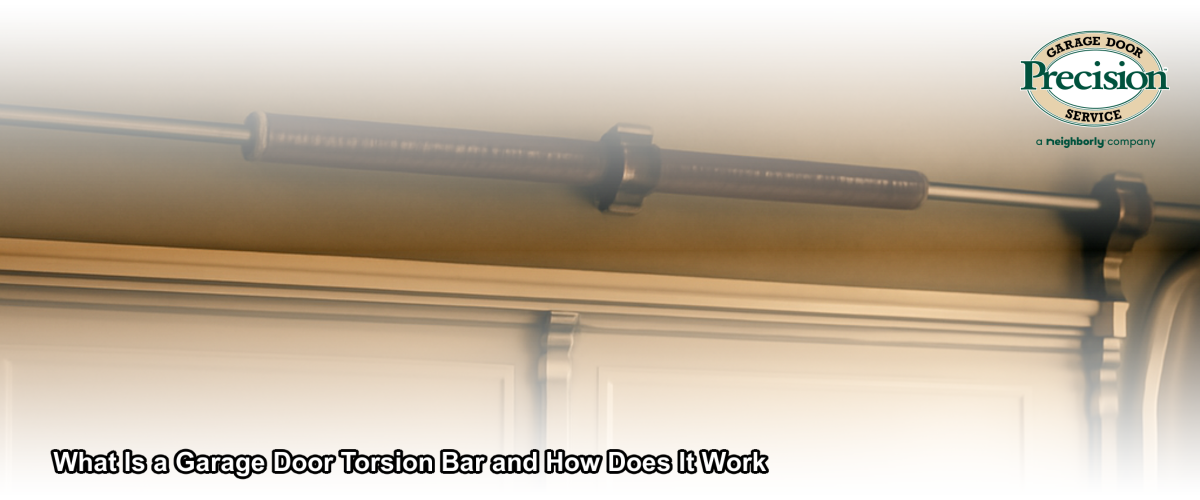
A garage door torsion bar is the horizontal steel shaft that runs across the top of your garage door opening, directly above the door. It works together with one or two torsion springs wound tightly around it to store and release the mechanical energy needed to lift and lower your garage door. Without the torsion bar, the spring system has no anchor point and cannot function.
At Precision Door Service of Central & South Jersey, our experienced technicians inspect the torsion bar and spring assembly as part of every service visit — because this component is at the heart of how your door moves safely every single day.
How does a garage door torsion bar work?
When your garage door closes, the torsion springs wound around the bar are wound tighter, storing energy. When you open the door — whether by hand or with an opener — that stored energy releases and the springs rotate the bar, which turns cable drums at each end and winds the lifting cables that raise the door. The torsion bar essentially acts as the axle for the entire counterbalance system.
This design is why a properly balanced garage door feels almost weightless when you lift it manually. The spring tension on the bar is doing most of the heavy lifting, which also protects your opener motor from unnecessary strain. As covered in our guide to garage door springs, the correct spring tension for your torsion bar setup depends on the exact weight of your door.
What is the difference between a torsion bar and extension springs?
A torsion bar system uses springs mounted on a central horizontal shaft above the door, while extension springs stretch along the horizontal tracks on either side of the door opening. Torsion bar setups are generally considered safer and more durable — the springs are contained on the shaft rather than flying loose if they break. Most newer garage doors and doors with higher headroom clearance in Central and South Jersey homes use torsion bar systems, though extension springs are still found on older installations with limited overhead space.
What are the main parts of a torsion bar assembly?
Understanding what makes up the assembly helps you recognize what your technician is referring to during a service visit. A complete torsion bar system includes:
- Torsion shaft (bar) — the horizontal steel rod the springs are mounted on
- Torsion springs — one or two coiled springs wound around the shaft; the number depends on door weight and width
- Cable drums — at each end of the bar, these wind the lift cables as the bar rotates
- Bearing plates — support the bar at the center and both ends
- Lift cables — run from the cable drums down to the bottom corners of the door
- Spring anchor bracket — the center bracket bolted to the header that anchors the stationary cone of the spring
How long does a garage door torsion bar last?
The torsion bar itself is a solid steel shaft and rarely wears out on its own — in most cases it lasts the lifetime of the door. The torsion springs wound around it, however, have a rated lifespan measured in cycles, with standard springs typically rated for 10,000 cycles. At 2 to 4 cycles per day, that translates to roughly 7 to 14 years of normal use. Upgrading to high-cycle springs at the time of replacement can extend that lifespan significantly, which is one of the honest recommendations our technicians make when the time comes.
Ocean County and coastal Monmouth County homeowners should note that salt air and humidity accelerate corrosion on both the bar and the springs. Regular lubrication and inspections — at least once a year — are especially important for homes near the water in towns like Point Pleasant Beach, Manasquan, or Bay Head. See our maintenance guide for specifics on what to look for.
What are the signs that something is wrong with my torsion bar or spring?
If your torsion bar assembly needs attention, you will usually notice one or more of these warning signs before a full failure occurs:
- The door opens unevenly or one side rises faster than the other
- A loud bang from the garage — often described as a gunshot — which typically signals a broken torsion spring
- The door feels extremely heavy when you try to lift it manually
- The garage door opener strains, slows, or reverses before fully opening
- Visible gaps in the coil of a torsion spring, indicating it has snapped
- Rust or corrosion visible on the spring coils or bar
A broken torsion spring is one of the most common repairs our certified technicians handle across Ocean, Monmouth, Mercer, and Middlesex Counties. In most cases, our technicians can complete the spring replacement the same day they come out — using high-quality parts built to last.
Is adjusting or replacing a torsion bar spring a DIY job?
Torsion spring adjustment and replacement is not a safe DIY project. The springs are wound under extreme tension — enough mechanical energy to cause serious injury if the spring slips, the winding bar kicks, or the bar spins unexpectedly. Professional technicians use calibrated winding bars, follow precise tension calculations based on door weight, and work with the right tools to do the job safely. Precision Door Service of Central & South Jersey strongly recommends leaving any torsion bar spring work to experienced technicians — it is one area where the risk simply is not worth it.
What does it cost to repair or replace a garage door torsion spring in New Jersey?
Torsion spring replacement cost depends on the number of springs, the spring size and cycle rating, and any additional components that need attention during the same visit. At Precision Door Service, our technicians provide a clear explanation of all recommended repairs before any work begins, so there are no surprises. For new door installations, we offer free estimates. Financing is also available through GreenSky for customers who need it, with an easy online application.
What else is typically included in a torsion spring service visit?
When a Precision Door Service technician comes out for a torsion spring repair, the visit includes a comprehensive safety inspection of the entire door system — not just the spring. That means checking cables, rollers, tracks, hardware, and the opener. If something else is worn or borderline, you will hear about it honestly, along with a clear explanation of whether it needs immediate attention or can wait. That transparent, customer-first approach is something we have built our reputation on over more than 25 years serving homeowners throughout Central and South Jersey.
This guide was prepared by the experienced technician team at Precision Door Service of Central & South Jersey, locally serving Ocean, Monmouth, Mercer, and Middlesex Counties since 2000.
Frequently Asked Questions
What does a garage door torsion bar do?
The torsion bar is the horizontal steel shaft mounted above your garage door that holds the torsion springs. As the door opens and closes, the bar rotates to wind and unwind lift cables, using stored spring energy to counterbalance the door’s weight so it opens smoothly and safely.
Can I replace a garage door torsion spring myself?
Torsion springs are wound under extreme tension and can cause serious injury if handled incorrectly. Replacement requires calibrated winding bars and precise tension calculations based on your door’s weight — this is a job for a professional technician, not a DIY repair.
How do I know if my torsion spring is broken?
A broken torsion spring usually produces a loud bang from the garage and leaves the door unable to open, or very heavy to lift manually. You may also see a visible gap in the spring coil. If this happens, stop using the door and call a technician.
How long do garage door torsion springs last?
Standard torsion springs are rated for about 10,000 cycles, which works out to roughly 7 to 14 years at typical household use. Salt air and humidity near the Jersey Shore can shorten that lifespan, making annual lubrication and inspections especially important for coastal homeowners.
Does Precision Door Service repair torsion springs the same day?
In most cases, yes. Precision Door Service of Central and South Jersey carries high-quality replacement springs on their service vehicles, so technicians can typically complete torsion spring repairs on the same visit they diagnose the problem.