What is a garage door trolley?
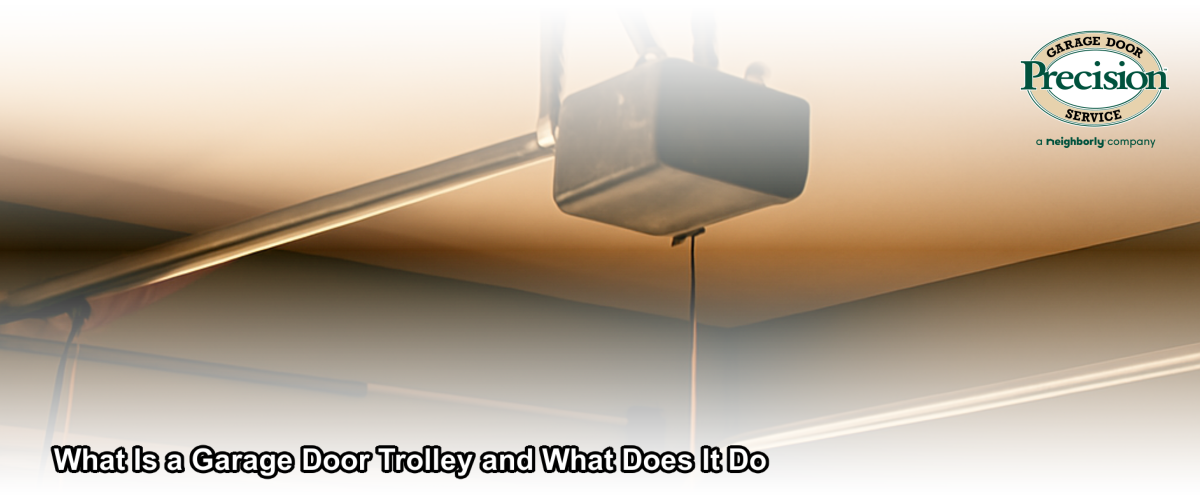
A garage door trolley — sometimes called a trolley carriage — is the sliding component that connects your garage door opener to the door itself, transferring the motor’s power into the up-and-down movement of the door. It rides along the opener’s metal rail, moving back and forth each time you open or close the door.
Think of the rail as a track and the trolley as the runner. When you press your remote or wall button, the opener’s motor drives a belt, chain, or screw along that rail, and the trolley travels with it — pulling or pushing the door through its arc. Without a functioning trolley, the motor runs but the door goes nowhere.
What does a garage door trolley actually do?
The trolley serves as the mechanical link between your opener’s drive system and the door’s top section, converting the linear motion of the drive mechanism into the lifting force your door needs. It attaches to the door via a curved metal arm called the J-arm or straight arm, which hooks into a bracket mounted on the top panel of the door.
Every time your door cycles — an average home garage door opens and closes roughly 3 to 5 times per day — the trolley completes that same trip along the rail. Over months and years, that repeated motion creates real wear on the trolley’s internal components, particularly its locking mechanism and connection points.
What is the disconnect cord on the trolley for?
The red rope hanging from your trolley is the emergency release cord, and pulling it disconnects the trolley from the drive mechanism so you can open the door manually during a power outage or opener failure. This is a safety feature required on residential openers, and the trolley is specifically designed to re-engage automatically the next time the opener runs — no manual re-attachment needed in most cases.
If your door suddenly feels disconnected or won’t respond to the opener after a power outage, a bumped emergency cord is often the first thing to check before calling for service. That said, if re-engaging the trolley doesn’t restore normal operation, the trolley itself or the drive system may have a separate issue worth having a technician inspect.
How do I know if my garage door trolley is worn or broken?
Common signs of a failing garage door trolley include grinding or straining sounds as the door moves, the opener running but the door not moving, the door stopping partway through its travel, or visible cracking and wear on the trolley body itself. Homes near the Jersey Shore — including coastal communities throughout Ocean and Monmouth Counties — see accelerated wear on metal hardware due to salt air and humidity, so trolley and hardware inspections are especially worthwhile here.
Other symptoms to watch for:
- The door reverses unexpectedly without hitting an obstruction
- Unusual jerking or hesitation midway through travel
- The J-arm connecting the trolley to the door appears bent or loose
- The trolley disengages on its own without the red cord being pulled
As covered in our broader maintenance guide, worn trolleys often show up during a comprehensive safety inspection before they cause a complete breakdown — which is one of the best reasons to schedule routine preventative maintenance rather than waiting for a failure.
Can I replace a garage door trolley myself, or do I need a professional?
Replacing a garage door trolley is a moderately technical repair that most homeowners can attempt on a chain-drive or belt-drive opener, but it does require working safely on a ladder, correctly identifying the replacement part for your specific opener model, and re-tensioning or re-routing the drive mechanism afterward. An incorrect part or improper reinstallation can cause the opener to bind, skip, or fail entirely.
For homeowners in Brick, Toms River, Freehold, and surrounding communities who want the job done right the first time, having a professional handle a trolley replacement typically takes under an hour and ensures the correct part is used with the drive system properly re-adjusted. Precision Door Service of Central & South Jersey carries high-quality replacement parts and our experienced technicians can often complete the repair the same day as the service call — no second trip needed.
How long does a garage door trolley last?
A garage door trolley on a well-maintained opener typically lasts anywhere from 10 to 15 years, though that lifespan shortens with heavy use, infrequent lubrication, or exposure to coastal salt air common throughout Ocean and Monmouth Counties. Openers that are pushed hard — multi-car households, homes with attached garages used as a primary entryway — will wear through trolleys faster than lightly used systems.
Replacing the trolley at or before the end of its service life, rather than after a complete failure, is almost always less expensive and less disruptive. See our full guide to garage door opener lifespan for a broader look at when to repair versus replace the entire opener system.
Does a new garage door opener come with a new trolley?
Yes — when you install a new garage door opener, the trolley is included as part of the complete opener assembly, so you start fresh with all components matched and properly fitted from the factory. Trolley wear only becomes a separate issue when you’re maintaining an existing opener and the trolley degrades before the motor or drive system does.
LiftMaster and Genie openers — two of the brands Precision Door Service of Central & South Jersey installs regularly — both use robust trolley designs engineered to handle thousands of cycles. Features like battery backup, available on select LiftMaster models, mean the trolley keeps working even when the power is out, protecting the full value of your opener investment.
What else should I know about garage door trolley replacement costs?
Trolley replacement is generally one of the more affordable opener repairs, but the total cost depends on your opener’s make and model, the cost of the specific replacement part, and any additional labor involved if the drive belt or chain needs to be re-routed in the process. At Precision Door Service of Central & South Jersey, our technicians perform a comprehensive safety inspection with every service call — so while they are replacing the trolley, they will flag any other worn components before those become emergencies.
What to expect during a typical trolley service visit:
- Technician confirms the trolley is the root cause (not the motor, belt, or limit settings)
- Correct replacement part is sourced for your specific opener brand and model
- Trolley is replaced and the drive mechanism is re-routed and tensioned
- Full safety inspection of springs, cables, rollers, and safety eyes is completed
- Technician explains findings and any additional recommended repairs — no pressure, honest recommendations
Financing is available through GreenSky with a simple online application if a larger repair or opener replacement turns out to be the right call.
This guide was prepared by the experienced technicians at Precision Door Service of Central & South Jersey, locally serving Central & South Jersey since 2000 from our offices in Brick and Milltown, NJ.
Frequently Asked Questions
What is a garage door trolley?
A garage door trolley is the sliding carriage that travels along your opener’s rail and physically connects the opener’s drive system to the door. It is what converts the motor’s motion into the force that lifts and lowers the door.
What happens when a garage door trolley breaks?
When the trolley fails, the opener motor will run but the door will not move, or the door may stop partway through its travel, jerk unexpectedly, or make grinding sounds. A broken trolley needs to be replaced before the door will operate reliably again.
Why does my garage door opener run but not move the door?
The most common reasons are a disconnected emergency release cord on the trolley or a worn-out trolley that has lost its grip on the drive mechanism. Check the red emergency cord first; if re-engaging it does not fix the problem, have a technician inspect the trolley and drive system.
How long does a garage door trolley last?
Most trolleys last between 10 and 15 years under normal use, but coastal salt air, heavy daily cycling, and infrequent lubrication can shorten that lifespan. Routine maintenance inspections can catch trolley wear before it causes a full breakdown.
Does Precision Door Service of Central and South Jersey replace garage door trolleys?
Yes. Precision Door Service of Central & South Jersey repairs and replaces trolleys and other opener components for homeowners throughout Ocean, Monmouth, Mercer, and Middlesex Counties, and technicians often complete the repair the same day as the service call.